How Films and Television Shape What We Wear
Sometimes, all it takes is one scene.
A woman walks into a room wearing a beautifully cut coat. An actress appears in a simple black dress that somehow looks more striking than everything else on screen. A character wears oversized shirts, vintage jewellery or a particular shade of lipstick, and suddenly, those details seem to be everywhere.
We have all seen some version of this happen. An outfit catches our attention, a character’s appearance stays in our minds long after the episode ends, or a film leaves us looking at our own wardrobes a little differently. We might not remember every conversation or even the entire storyline, but we remember what someone wore.
This is one of the quiet ways fashion enters our lives. We do not always discover a style through a fashion magazine, a runway show or a carefully planned shopping trip. Sometimes, it begins with a character we have come to love, admire, envy or simply enjoy watching.
And the interesting part is that we rarely want the clothes alone. We want a little of what those clothes seem to represent: confidence, freedom, romance, authority, mystery or the feeling of having our lives beautifully under control.
The Characters Who Change Our Taste
Think about the characters whose wardrobes have become almost as recognisable as their personalities. Their clothes are not merely there to make them look attractive. They help tell us who they are before they have even spoken.
A sharply tailored suit can suggest authority. A worn leather jacket might hint at rebellion. Soft knits, loose trousers and familiar everyday pieces can make a character feel approachable, while elaborate dresses and carefully chosen jewellery can create a sense of glamour or distance.
The clothing becomes part of the storytelling. We begin to associate certain colours, shapes and details with the people wearing them. Over time, those associations can influence what we find appealing in real life.
Consider how a character dressed for an ordinary morning can sometimes leave a stronger impression than one dressed for a grand occasion. A simple combination of jeans, a white shirt and a well-fitting jacket may look entirely unremarkable on a clothing rack. On screen, however, the same combination can feel effortless because we see it in motion, in context and on someone whose personality gives it meaning.
That is the power of costume design. It helps create a character, but it can also give viewers new ideas about what clothes might look like outside the world of the story.
When a Fictional Wardrobe Enters the Real World
Fashion and entertainment have influenced one another for decades. Certain films and television series have made particular silhouettes, accessories and styling choices part of wider cultural conversations.
Think of the little black dress associated with Audrey Hepburn in Breakfast at Tiffany’s, the polished, colourful wardrobes of Sex and the City, or the preppy layers and school-inspired looks that gained renewed attention through Gossip Girl. These examples differ in tone and era, but each demonstrates how a screen wardrobe can become a reference point far beyond its original story.
The influence does not always arrive as a direct copy. Someone might never wear an entire outfit from a television series, yet begin choosing more structured coats, delicate necklaces or coordinated separates because those details have become appealing to them.
Sometimes, the influence is temporary. A particular bag shape, shoe style or colour becomes popular because audiences have seen it repeatedly. At other times, a character introduces viewers to a way of dressing that remains attractive long after the programme has ended.
The distinction matters. A passing trend may capture attention because it is everywhere, while a lasting influence changes what someone notices and appreciates. A viewer might discover a love of vintage clothing through a period drama or become interested in tailoring after watching a character whose wardrobe is built around beautifully fitted jackets.
The screen has not simply shown them what to buy. It has helped them recognise a style they might enjoy.
Why We Want to Dress Like Someone Who Isn’t Real
There is another reason fictional fashion can feel so compelling: we see clothing attached to a life that has been carefully constructed for us.
A character may have a distinctive wardrobe, an interesting job, a beautiful apartment and a seemingly endless supply of time to prepare for the day. Even when the story is difficult or the character is deeply flawed, their appearance can feel wonderfully coherent. The clothes, surroundings, dialogue and personality all seem to belong together.
Real life rarely works that way. We get dressed while answering messages, preparing for work, managing responsibilities or trying to leave the house on time. Our clothes must survive weather, transport, long hours and ordinary practical inconveniences.
On screen, an outfit might be remembered for its elegance. In real life, we also need to know whether we can sit comfortably in it, walk in our shoes or wear it more than once without feeling that it belongs to a different version of ourselves.
This does not make our attraction to fictional wardrobes foolish. It simply explains why the translation from screen to everyday life is not always straightforward.
We are responding to an entire image, not just a garment. Sometimes, what we admire is the character’s confidence rather than the coat itself, or the freedom suggested by their lifestyle rather than the expensive-looking handbag they carry.
Recognising that difference can make fashion more interesting. Instead of asking how to reproduce an entire fictional wardrobe, we can ask which particular quality attracted us in the first place.
Was it the simplicity? The confidence? The sense of ease? The way everything appeared to work together?
Those are ideas we can carry into our own wardrobes without needing to recreate someone else’s life.
The Difference Between Inspiration and Imitation
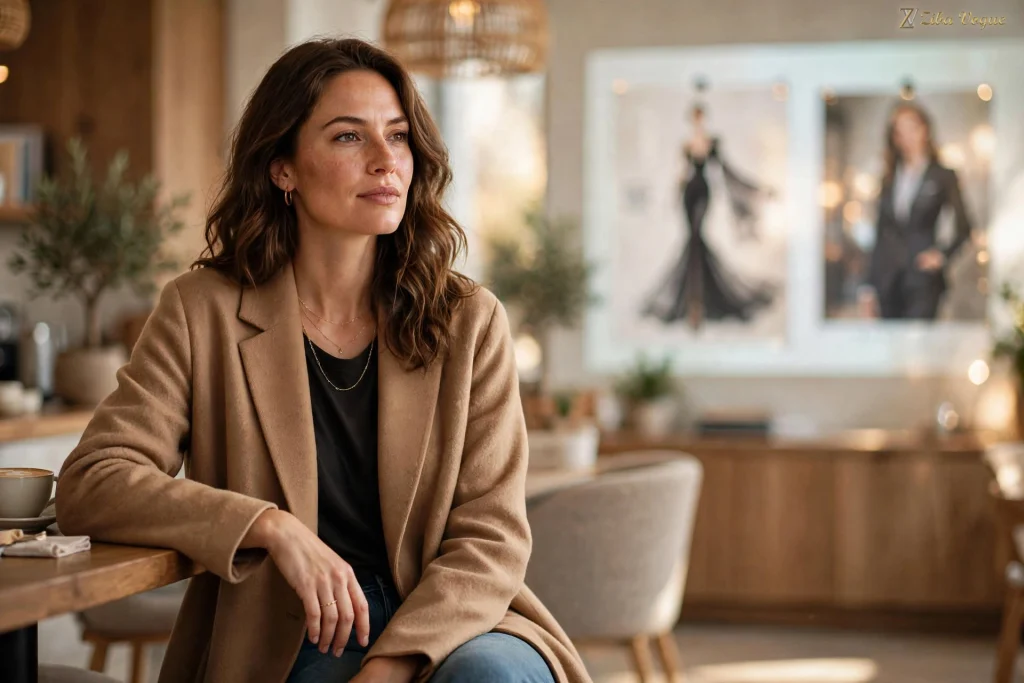
There is nothing wrong with wanting to borrow an idea from a character. Fashion has always developed through observation, interpretation and the exchange of influences. The problem begins when inspiration turns into the belief that we must reproduce an entire look to achieve the same effect. A fictional character’s wardrobe is usually designed around a specific personality, setting and storyline.
What works beautifully for a glamorous television executive may feel uncomfortable or impractical for someone whose days look entirely different.
A dramatic evening dress might be memorable on screen but have very little place in an everyday wardrobe.
Rather than copying an outfit from head to toe, it can be more useful to identify the elements that appeal to us.
Perhaps it is the contrast between a tailored jacket and relaxed denim. Perhaps it is a preference for warm colours, delicate jewellery or long, flowing silhouettes. Someone drawn to a character’s understated wardrobe might discover that they prefer fewer colours and cleaner lines. Another viewer might be inspired by bold accessories or the freedom to mix vintage and contemporary pieces.
These ideas can be adapted to different budgets, body shapes, climates, cultural preferences and lifestyles. They can also change with time.
For someone who dresses modestly, the inspiration might be a long coat, a beautifully coordinated colour palette or the way an outer layer brings an outfit together. There is no need to reproduce a character’s entire look for an individual detail to be useful. The goal is not to become the person on screen. It is to understand what their style has helped you discover about your own.
When the Outfit Becomes More Famous Than the Story
Sometimes, the clothes outlive the story they were created to serve. A particular dress becomes a cultural reference, a hairstyle is recreated for years, or a character’s signature accessories become instantly recognisable even to people who have never watched the original series.
This happens partly because fashion gives visual form to memory. We may associate an outfit with a romantic moment, a character’s transformation or a scene that made us laugh. The garment becomes attached to an emotion, and that emotion helps keep the image alive.
Social media has made this process even more visible. A memorable outfit can be separated from its original context, shared in photographs and short clips, and recreated by people who encounter it long after the film or programme first appeared. A look that once belonged to a particular character can become a wider source of inspiration.
There is a trade-off, however. Once a look becomes a trend, its original meaning can get lost. People may begin buying similar pieces simply because they recognise the aesthetic, without understanding what made it distinctive in the first place.
That does not mean the influence is any less real. It means the relationship between fashion and entertainment keeps evolving. A look begins as part of a story, becomes an image people remember, and eventually takes on a life of its own.
What Our Screen Favourites Reveal About Us
One of the most interesting parts of this relationship is how differently people respond to the same character.
Two people can watch the same film and be drawn to completely different wardrobes. One notices the elegant coats; another remembers the jewellery. Someone else pays attention to the character who dresses casually, repeats favourite pieces and never appears particularly concerned with trends.
Their reactions reveal something about their own preferences. We are not simply absorbing what the screen presents. We are selecting, interpreting and responding to it through our individual experiences.
A person who admires a character’s confidence may be drawn to sharper tailoring. Someone who loves the atmosphere of a period drama might develop an interest in vintage details. Another viewer may appreciate a beautifully styled wardrobe without wanting to wear any of it.
All these responses are valid. Admiring a look does not create an obligation to adopt it.
This is also why the same fashion reference can lead to very different outfits in real life. One person might recreate the silhouette almost exactly, while another borrows only its colours or proportions. Both have taken inspiration from the same source, but the result belongs to each of them.
And that is where fashion becomes more than imitation. The original idea may come from a screen, but what we do with it is personal.
Keeping the Magic Without Losing Yourself
The next time a character’s outfit catches your attention, look closely at what makes it work. Notice the colours, proportions, textures and details that give it character.
Then bring the idea into your own world.
A coat can be styled with clothes you already wear. A favourite character’s colour palette can inspire a combination you would not normally try. An accessory can add interest to a familiar outfit without requiring an entirely new wardrobe.
Fiction allows fashion to become more dramatic, more romantic and sometimes more beautiful than everyday life. That is part of its appeal. We can enjoy the fantasy while recognising that our own wardrobes must work for the lives we actually lead.
The best screen-inspired style is not a perfect recreation of a fictional character. It is an idea from their world that finds a natural place in ours—and begins to feel like our own.
From Screen to Wardrobe: A Practical Guide
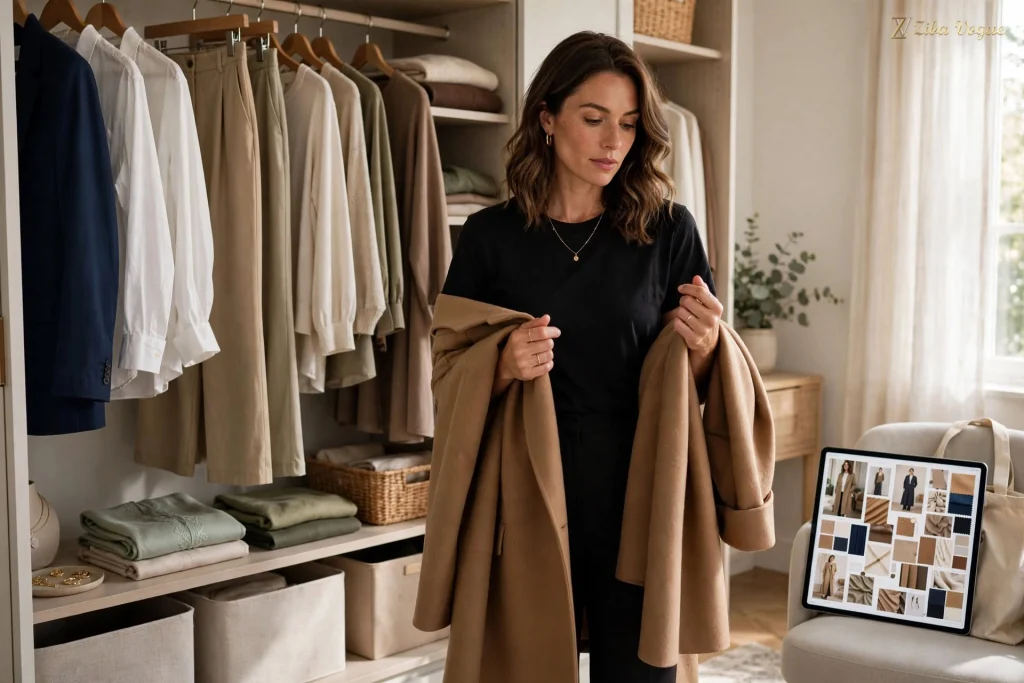
The next time an outfit in a film or television series catches your eye, look beyond the clothes themselves. What makes the look memorable? Is it the way a coat shapes the silhouette, the combination of colours, or the effortless balance between simple pieces? You don’t need the same designer or an entirely new wardrobe to capture that feeling. You need to understand what appeals to you and find a way to make it work in your own life.
1. Pinpoint the detail that caught your attention.
Before searching for the exact outfit online, identify what you actually admire. It might be a beautifully tailored coat, an unexpected colour combination, a relaxed silhouette or a few carefully chosen accessories. The more clearly you understand your preference, the easier it becomes to take inspiration without feeling compelled to copy the entire look.
2. Recreate the idea, not the exact outfit.
Break the look down into its main elements: the shape of the clothes, the layers, the colours and the finishing touches. A navy blazer, for instance, might give you the same polished feeling as one worn by a favourite character, even when the rest of your outfit is entirely different.
3. Start with what you already own.
Before opening a shopping app, look through your wardrobe with fresh eyes. Try a familiar shirt beneath a structured jacket, pair wide-leg trousers with a different top, or introduce an accessory you rarely wear. You may already have the pieces you need; they simply haven’t been put together in that particular way.
4. Make the look fit your life.
An outfit can look wonderful on screen and still be impractical for your everyday routine. Think about your climate, comfort, budget and where you intend to wear it. If modest dressing is part of your personal style, a longer coat, flowing outer layer or coordinating hijab can help you adapt the original idea while staying true to your preferences.
5. Be selective about what you buy.
Sometimes, one new piece really can complete a look. Before purchasing it, ask yourself three questions: Can I wear it with at least three things I own? Will it suit my everyday life? Would I still want it if the film or series were no longer trending? These questions help separate a genuine preference from the excitement of seeing something everywhere.
6. Leave room for your own interpretation.
Change the colours, choose different shoes, add your favourite jewellery or make the outfit more relaxed. Your version does not need to be an exact recreation to capture what made the original appealing. In fact, the changes you make may be what turn the inspiration into something distinctly yours.
The aim is not to dress like a fictional character. It is to recognise the ideas that resonate with you and translate them into clothes that feel natural in your own wardrobe.
Try It Yourself
Choose one outfit from a film or television series that you genuinely love. Write down what attracted you to it, identify two or three similar pieces already in your wardrobe, and decide how you could adapt the look for your everyday life. Put the combination together before buying anything new.
You might discover that what you admired was never about owning a particular outfit. It was about seeing familiar clothes in a new way.