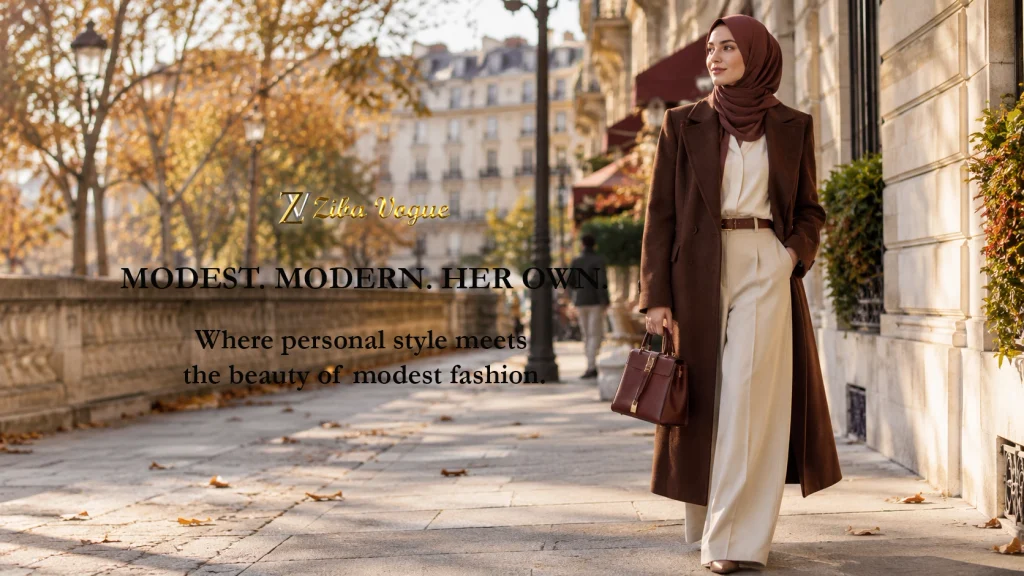
There is something beautiful about a woman who knows how she wants to dress. She may love the quiet elegance of a flowing abaya, feel most comfortable in wide-leg trousers and a long shirt, or reach for her favourite jeans, a beautifully draped hijab and a coat that brings the entire outfit together. Her style might be traditional, contemporary, or a little of both. What matters is that it feels like her.
For many Muslim women, getting dressed is about more than deciding what looks good that morning. It can be a personal balance between faith, comfort, culture and the simple pleasure of wearing something beautiful. That balance does not have to come at the expense of individuality. Modesty can be graceful without feeling predictable, fashionable without feeling excessive, and modern without losing the values that make it meaningful.
This is what makes modest fashion so interesting today. It cannot be defined by a single garment, a particular silhouette or one familiar way of wearing a hijab. Instead, it reflects the many ways women bring their beliefs, personalities and preferences into the clothes they choose. And in that variety lies something worth celebrating: the freedom to dress with intention while remaining entirely yourself.
Modesty Was Never Meant to Mean One Look
Imagine walking through a busy city and noticing the different ways women dress. One woman wears a black abaya with a soft, neutral hijab. Another pairs a long tailored coat with loose trousers and elegant flats. Nearby, someone has styled a flowing dress with a belt, a matching headscarf and a structured handbag. Each outfit feels different, yet each woman has made deliberate choices about how she wants to present herself.
There is no single picture that captures every Muslim woman’s relationship with fashion. Culture, personal preference, climate, lifestyle and individual interpretations of modesty all influence what she chooses to wear. A woman living in a colder European city may build her wardrobe around wool coats, boots and generous layers, while someone in a warmer climate might prefer lightweight abayas, breathable fabrics and flowing dresses.
Neither wardrobe needs to look alike.
The beauty lies in having room for personal expression. Modest dressing does not require every woman to follow the same colour palette, avoid every trend or dress in a way that makes her disappear into a crowd. It allows women to decide what feels appropriate for them, then bring their own sense of beauty to those choices.
And that is where personal style begins.
The Abaya Has More to Say Than You Think
For years, the abaya has been associated with a familiar image: a long, often black garment with a simple silhouette. That classic look remains timeless, but it represents only one side of abaya fashion.
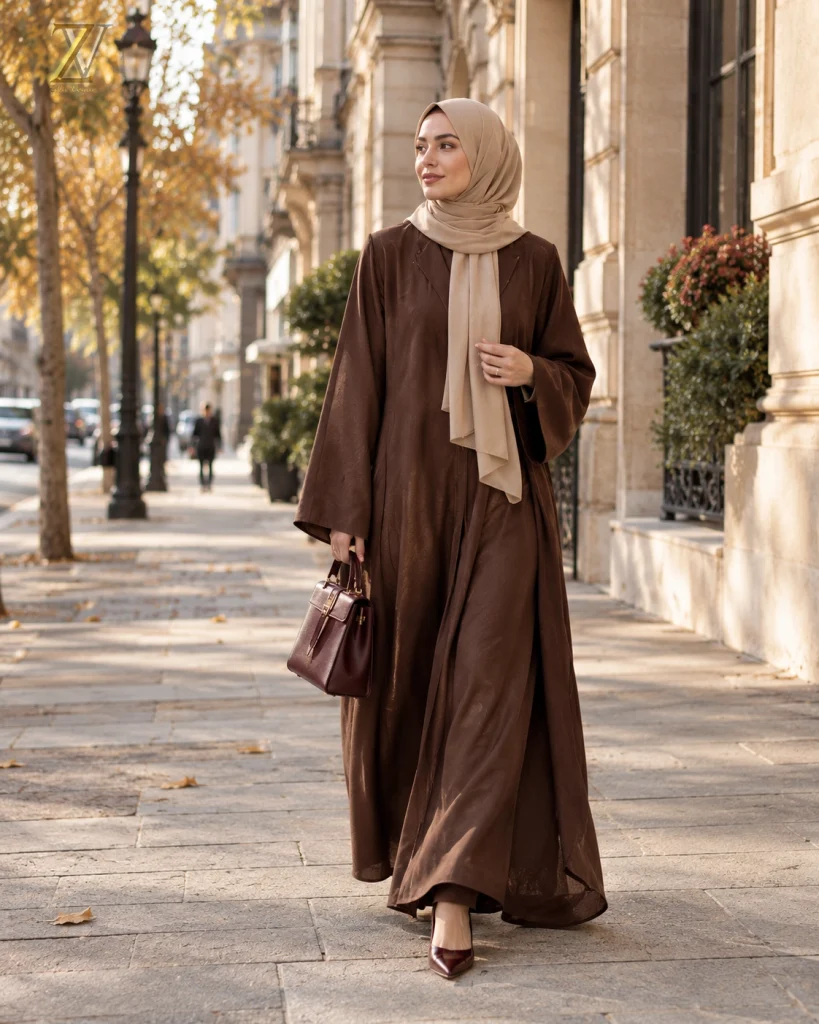
Today, an abaya can feel polished, understated, romantic or distinctly contemporary, depending on how it is styled. A chocolate-brown abaya with a matching hijab creates a rich, coordinated look, while a soft beige design paired with a cream handbag feels light and refined. Subtle textures, elegant sleeves or carefully placed details can add interest without overwhelming the garment.
The difference often lies in the details rather than the design itself. The way an abaya drapes, the feel of its fabric and the colours chosen to accompany it can transform an otherwise simple outfit.
Accessories offer another way to make the look personal. A structured handbag and pointed flats lend a tailored finish, while elegant sandals and a softly draped hijab create a more relaxed impression. For a special occasion, delicate jewellery or an embellished clutch can introduce a little extra character without making the outfit feel overdone.
An abaya does not need to be elaborate to make an impression. Sometimes, its beauty lies in its simplicity—and in the way a woman styles it to reflect her own taste.
Yes, Jeans Can Have a Place in a Modest Wardrobe
Not every woman wants to wear an abaya every day, and not every occasion calls for a flowing dress. Some women love denim; others prefer tailored trousers, oversized shirts or relaxed everyday separates. Depending on her own understanding of modesty, a woman can build a wardrobe that includes these pieces without sacrificing the style she enjoys.
Consider straight-leg or wide-leg jeans paired with a longline shirt that falls comfortably below the hips. A lightweight hijab in a complementary shade, simple flats or trainers, and a long coat when the weather turns cold can bring the look together. The result feels contemporary and effortless without requiring complicated styling.
For a more polished outfit, dark denim works beautifully with a flowing tunic, a long blazer or another elegant outer layer. A coordinated handbag and shoes can pull everything together, making the combination feel considered rather than purely practical.
Proportion plays an important role, too. The length of a shirt, the cut of the jeans and the way different layers sit together can all influence the overall look. Relaxed silhouettes and longer layers offer plenty of room to create different combinations while keeping comfort in mind.
There is no single formula for dressing modestly in denim. The most useful approach is to find combinations that suit everyday life, feel comfortable to wear and reflect the woman’s own preferences.
Winter Is Where Modest Fashion Comes Into Its Own
There is something wonderfully suited to modest dressing about winter. The season invites layers, rich textures and thoughtful combinations, allowing even familiar wardrobe pieces to feel new again.
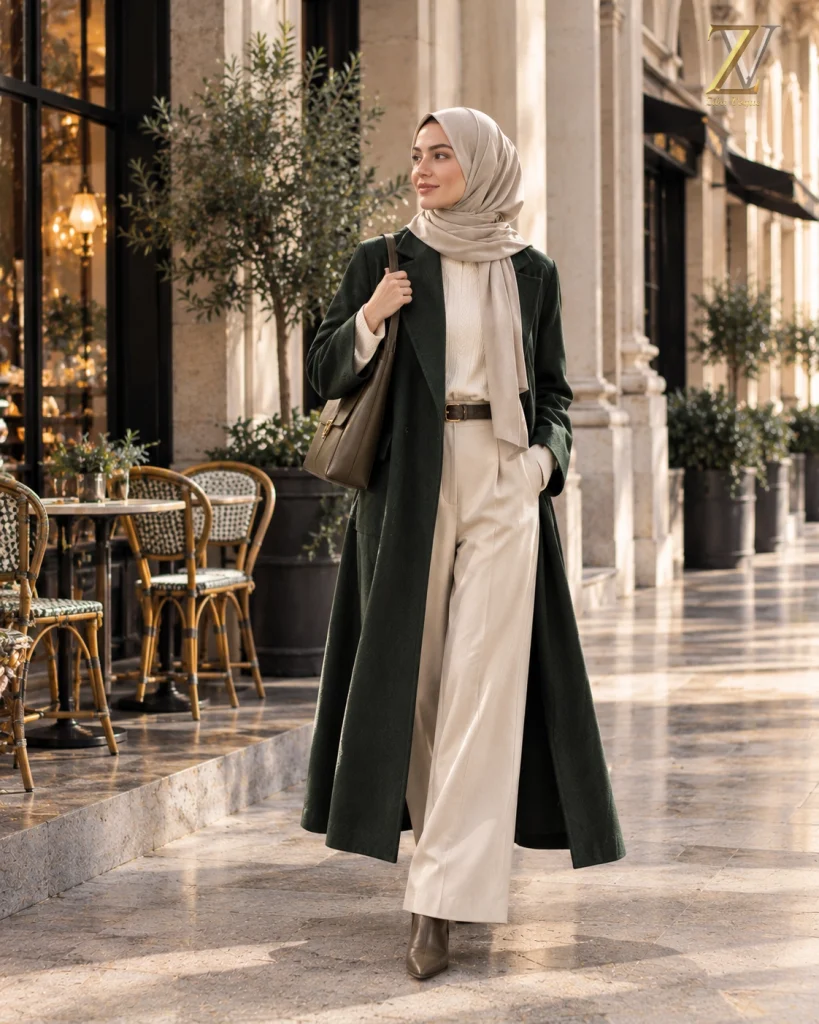
A long wool coat over a knit dress, tall boots and a coordinating hijab can create a beautifully pulled-together outfit. Wide-leg trousers with a fine-knit top, a longline blazer and a warm scarf offer another option for days when comfort matters as much as appearance. And for women who prefer abayas, a heavier fabric or a tailored winter coat worn over the outfit can provide warmth without sacrificing the flowing silhouette.
Colour makes a difference, too. Black, camel, charcoal and cream are timeless choices, but winter fashion need not be limited to neutrals. Deep burgundy, forest green, plum and chocolate brown bring warmth and depth to colder-weather outfits. A muted pink hijab or a burgundy handbag can introduce a beautiful touch of colour to an otherwise understated look.
Texture matters just as much. Wool coats, ribbed knitwear and soft jersey create depth, even when an outfit is built around just two or three colours. Pairing a softly draped hijab with a structured coat, for instance, can give a simple combination a more considered, polished feel.
Then there are the practical details that make an outfit work beyond the mirror. Comfortable footwear, breathable layers and fabrics that sit well together can make getting dressed on a cold morning much easier. Winter style is not about adding layer after layer simply because the season calls for it. It is about choosing each piece with care, so that warmth, comfort and personal style come together naturally.
The Small Details That Make an Outfit Feel Like Her
Sometimes, the difference between a nice outfit and one that feels unmistakably personal has very little to do with the clothes themselves.
It might be the way a woman drapes her hijab, the colours she returns to season after season, or the handbag she carries so often that it becomes part of her signature look. One woman feels most confident in clean lines and minimal jewellery; another is drawn to colourful scarves, delicate details and flowing silhouettes. Neither needs to dress like the other to look put together.
These details are easy to overlook when fashion conversations revolve around the latest trends. Yet they are often what make an outfit memorable. A familiar combination of colours, a favourite accessory or a particular way of layering can give even the simplest clothes a distinctive character.
There is no need to reinvent an entire wardrobe to make it feel fresh. A different hijab colour can change the mood of an abaya, while a structured handbag or a pair of elegant shoes can bring a new feel to an outfit worn many times before. A long shirt might be paired with tailored trousers for one occasion and a flowing skirt for another. Small changes can make familiar pieces feel surprisingly different.
Over time, these choices become a kind of visual language. They reveal something about the woman wearing the clothes without requiring her to explain herself.
And perhaps that is one of the loveliest things about personal style: it allows a woman to express who she is, sometimes through the smallest details.
Fashion Should Make Room for the Woman, Not Just the Outfit
There is a certain pressure in modern fashion to keep up. Every season brings new colours, new silhouettes and another list of things we are apparently supposed to own. Social media can make it seem as though a stylish wardrobe requires constant reinvention, with something new always waiting to replace what we already have.
But a thoughtful modest wardrobe can be built on a different idea: choosing clothes that suit everyday life, work well together and remain appealing long after a trend has passed.
A well-cut coat, comfortable wide-leg trousers, versatile long shirts, flowing dresses and hijabs in complementary colours can offer countless combinations. The value of these pieces lies not in how many outfits they create on paper, but in how naturally they fit into a woman’s life. Clothes should work for her daily routine, her comfort and her personal preferences—not simply for a photograph or a passing trend.
That does not mean avoiding trends altogether. A woman might fall in love with a new colour, experiment with a different silhouette or try a combination she has never considered before. Fashion should leave room for that curiosity. The important thing is having the freedom to decide which trends feel right and which can be left behind.
For Muslim women, personal style can also involve finding a balance between individual taste, comfort and their own understanding of modesty. There is no need for every wardrobe to look the same, and there is no single aesthetic that represents every woman’s experience.
Modesty and individuality can exist together. So can elegance and comfort. A woman can enjoy fashion, dress with intention and make choices that reflect her own values without feeling that she must constantly prove herself through what she wears.
She does not need a wardrobe that impresses everyone else. She needs one that makes sense for her—and in which she feels entirely herself.
Entirely Her Own
What makes modest fashion so compelling is not a particular abaya, a perfectly coordinated hijab or the latest winter silhouette. It is the remarkable variety of women who make it their own.
There is the woman who loves traditional clothing, the one who gravitates towards contemporary tailoring, and the one who builds her wardrobe around denim, long shirts and flowing layers. Some feel most at home in understated neutrals; others bring colour into their outfits, even on the greyest winter days. Their styles may look nothing alike. They do not have to.
A woman’s relationship with clothing is deeply personal. For many Muslim women, it is also connected to faith, identity and the values they carry into everyday life. That deserves to be understood without reducing millions of women to a single aesthetic or assuming that one interpretation of modest fashion can represent them all.
The most interesting wardrobes reflect real lives rather than idealised images. They change with the seasons, adapt to new circumstances and make room for evolving tastes. They hold on to familiar favourites while leaving space for experimentation, unexpected combinations and the small details that make an outfit feel personal.
Modest fashion does not have to choose between being modern and being meaningful. It can be elegant without being predictable, expressive without losing its sense of purpose, and practical without sacrificing beauty.
Ultimately, a woman’s style does not need to fit someone else’s picture of what modest fashion should look like. It can reflect her beliefs, her experiences, her preferences and the life she wants to lead.
Because the most beautiful style is not the one that makes a woman look like everyone else. It is the one in which she recognises herself.