
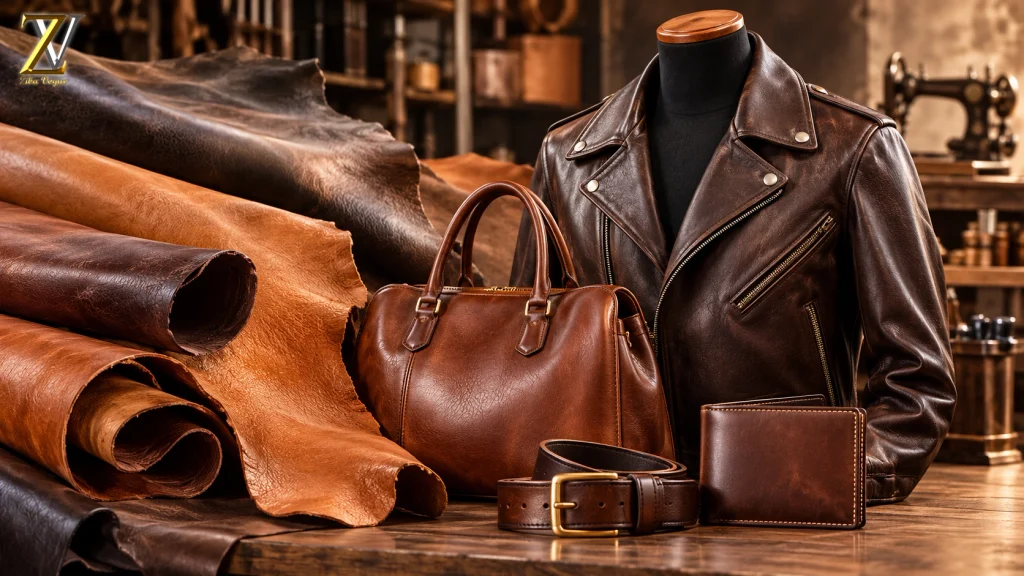
There is something about genuine leather that is difficult to imitate.
It might be the rich texture of a well-made leather jacket, the way a beautiful handbag develops character over the years, or the familiar feel of a leather wallet that has travelled with someone through countless ordinary days. Some materials are chosen because they are fashionable at a particular moment. Leather has a different kind of appeal. It has a history, a character and a relationship with craftsmanship that continues to attract people across generations.
A leather jacket can transform an otherwise simple outfit. A carefully made handbag can become an everyday companion. A good leather belt does its job quietly, while a wallet carried for years can become almost personal. These are not necessarily extravagant purchases. They are examples of how the quality of a material can influence the way we use, appreciate and keep the things we own.
Yet, walk into a shop or browse an online collection and the terminology can become confusing. Genuine leather, PU leather, full-grain, top-grain, cowhide, lambskin, goatskin: the labels are everywhere, but what do they actually mean?
And does expensive leather always mean better leather? Is cowhide better than lambskin? What makes one leather jacket last for years while another loses its appearance much sooner?
Understanding leather begins with looking beyond the surface.
Why Genuine Leather Continues to Hold Its Appeal
Fashion changes constantly, but certain materials remain desirable because they offer something beyond a particular season’s trends.
Genuine leather is one of them.
Its appeal comes from a combination of natural characteristics, versatility and the craftsmanship involved in turning an animal hide into a finished product. Natural leather has a fibrous structure, a distinctive grain and variations that can make each piece slightly different. Its appearance can also change with use, depending on the type of leather and its finish.
This is particularly noticeable in well-maintained leather that develops a patina: a gradual change in colour, tone and surface character created through age, handling and exposure to everyday conditions.
A leather jacket may become softer around the elbows. A frequently carried handbag may develop a deeper tone at its handles. A wallet may acquire small marks that tell the story of how often it has been used.

These changes are not necessarily signs of deterioration. In suitable leathers, they can become part of the material’s character.
There is also an unmistakable connection between leather and style. From classic motorcycle jackets and tailored leather coats to structured handbags and understated accessories, leather has found a place in wardrobes that have very different tastes and lifestyles.
It can look rugged, refined, minimal or luxurious. Its versatility is one reason it continues to be valued.
Genuine Leather and PU Leather: Understanding the Difference
One of the most important things to understand before purchasing a leather product is the difference between natural leather and synthetic alternatives.
Genuine leather is made from animal hide or skin that has been treated through tanning. The natural fibrous structure is retained, although the surface may be dyed, coated, embossed or otherwise finished.
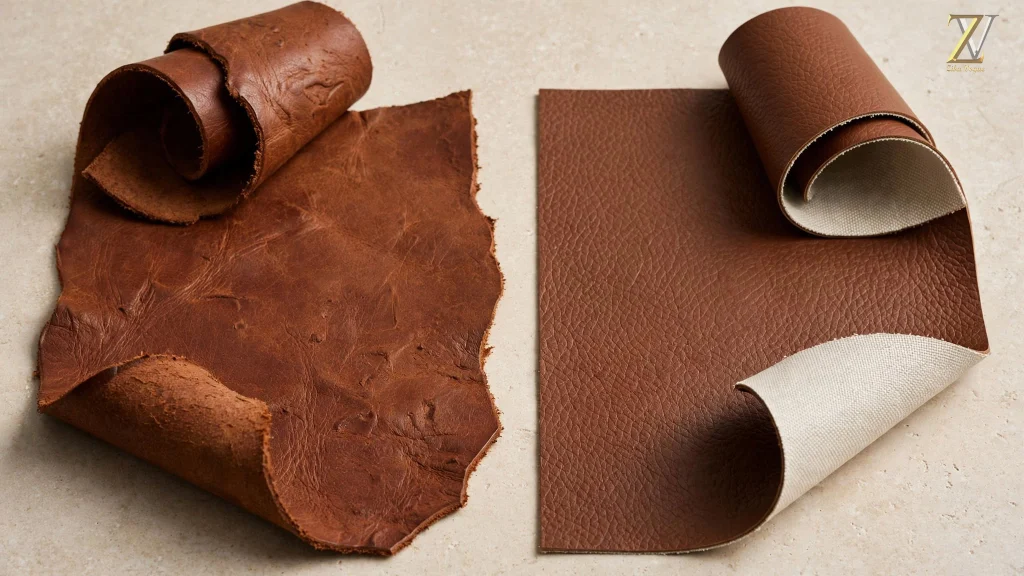
PU leather, on the other hand, is a synthetic material made using polyurethane. It commonly consists of a textile or other backing with a polyurethane surface designed to imitate the appearance of leather.
The two materials can look remarkably similar, especially in photographs. However, their composition and behaviour are different.
Natural leather has a three-dimensional fibrous structure. PU leather relies on a manufactured coating. With use, some PU products can develop cracks, peeling or separation of their surface layer, particularly when exposed to heat, repeated flexing or unsuitable storage.
Natural leather can also suffer damage, drying, staining and cracking if neglected. It is not indestructible. However, suitable natural leather, properly processed and maintained, can remain useful for many years and may be professionally repaired or refinished in ways that are difficult with peeling synthetic coatings.
This is why the distinction matters.
A synthetic alternative can be a perfectly reasonable choice for someone looking for a lower-cost, animal-free material. But someone specifically seeking the characteristics, craftsmanship and potential longevity of natural leather should check that the product is genuinely made from leather rather than PU.
The appearance alone is not enough. Always read the material description.
Not All Genuine Leather Is the Same: Understanding Leather Grades
This is where many buyers make assumptions.
The phrase genuine leather confirms that a product is made from natural leather, but it does not, by itself, tell you the grade, quality or layer of the material.
To understand what you are purchasing, it helps to know the main leather classifications.
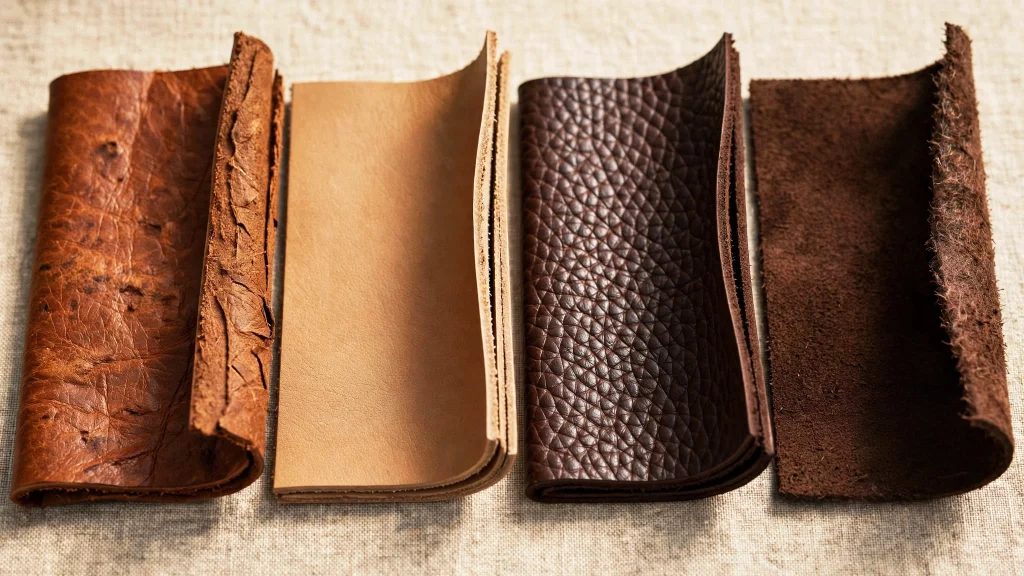
Full-Grain Leather
Full-grain leather retains its original grain surface without corrective sanding or buffing to remove the natural grain.
It can show small natural markings, variations and characteristics of the original hide. Rather than hiding every irregularity, full-grain leather preserves much of the surface that gives natural leather its distinctive appearance.
It is often sought after for premium jackets, bags, belts and wallets because of its natural character and potential to develop an attractive patina.
However, full-grain does not automatically guarantee excellent workmanship or durability. The quality of the hide, tanning, finishing and construction still matters.
Top-Grain Leather
Top-grain leather comes from the upper layer of the hide but has undergone some surface correction, such as sanding or buffing, to reduce imperfections.
It can have a more uniform appearance and is widely used in quality leather products.
For people who prefer a cleaner, more consistent finish, top-grain leather can be an appealing choice. It is not simply an inferior substitute for full-grain; the suitability depends on the product and its intended use.
Corrected-Grain Leather
Corrected-grain leather has undergone more substantial surface treatment to reduce visible imperfections. The surface may be embossed or finished to create a more consistent appearance.
This can produce attractive products, but the original natural grain is no longer fully preserved.
Split Leather
A hide can be divided into layers during processing. The upper grain layer is separated from the lower layers, which are known as split leather.
Split leather can be used in many products and may receive different finishes. Suede, for example, can be made from split leather or other leather layers finished to produce a soft, velvety surface.
The important point is to understand what the seller is actually describing rather than assuming that every leather product has the same structure.
Cowhide, Sheepskin, Lambskin, Goatskin and Buffalo: Which Leather Is Right for You?
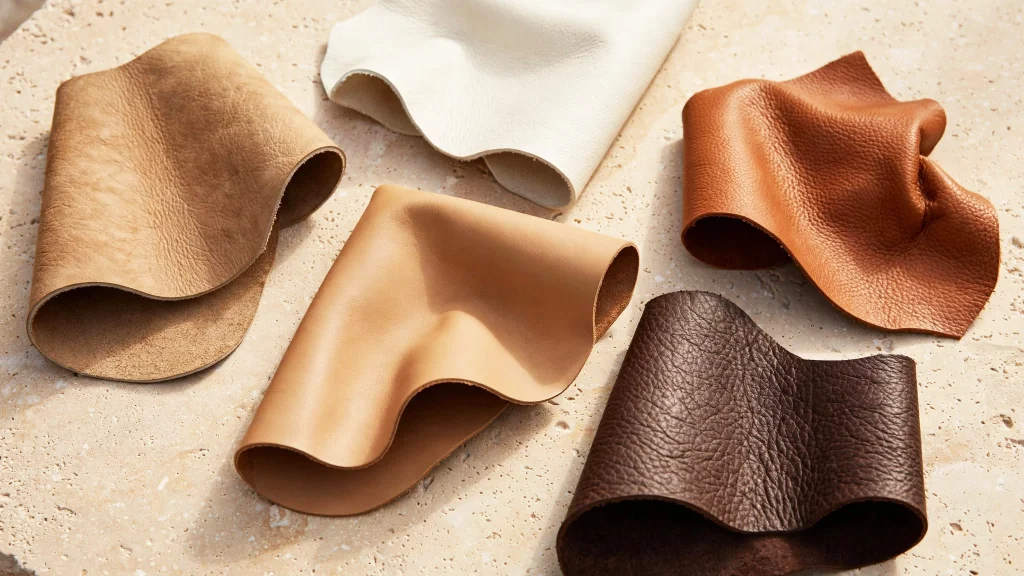
The animal from which the hide or skin comes influences its natural characteristics. Thickness, fibre structure, grain and flexibility can differ considerably.
But there is no single answer to which animal produces the best leather. Different materials serve different purposes.
Cowhide: Strength and Structure
Cowhide is widely used in leather jackets, footwear, bags and other products that benefit from a substantial material.
It is generally thicker and firmer than sheep leather. Its natural structure can provide good resistance to everyday wear, making it suitable for jackets with a more structured silhouette.
A new cowhide jacket may feel firm at first. Depending on its thickness and processing, it can gradually soften with wear.
Cowhide is particularly popular in classic biker jackets, bomber styles, workwear-inspired garments and structured accessories.
Where it works well: Leather jackets, sturdy bags, belts and footwear.
Sheepskin and Lambskin: Softness and Flexibility
Sheepskin is generally lighter and more supple than cowhide.
Lambskin, obtained from younger sheep, is especially appreciated for its fine grain, softness and smooth feel. It is frequently used in fashion jackets, leather blazers, handbags and refined accessories.
Its softness makes it comfortable and flexible, but it may be more susceptible to scratches and scuffs than a heavier, firmer leather.
There is also an important distinction between ordinary lambskin leather and shearling.
Shearling is sheepskin or lambskin with the wool retained on one side and the leather on the other. It is used to make insulated coats and jackets that are particularly suited to cold weather.
Where it works well: Lightweight fashion jackets, leather blazers, handbags, gloves and shearling outerwear.
Goatskin: Natural Grain and Flexibility
Goatskin has a distinctive natural grain, often with a slightly pebbled appearance.
It is valued for its combination of flexibility and strength relative to its weight. Compared with very soft lambskin, it can offer a more textured and resilient feel.
This makes it a versatile material for leather clothing, gloves, bags and accessories.
Where it works well: Jackets, gloves, handbags, wallets and other everyday leather goods.
Buffalo Leather: A More Pronounced Character
Buffalo leather often has a noticeable grain pattern and a substantial feel.
Depending on the hide and processing, it can be firm, durable and visually distinctive. Its natural texture makes it appealing to people who prefer leather with a more pronounced appearance.
It is used in jackets, bags, belts and other leather products.
Where it works well: Structured bags, jackets, belts and products where a distinctive grain is desirable.
Which One Should You Choose?
The best choice depends on how you intend to use the product.
If you want a substantial jacket with a structured feel, cowhide may suit you. If softness and lightness matter more, lambskin may be preferable. Goatskin offers another combination of flexibility and natural grain, while buffalo leather is worth considering for its distinctive texture.
The animal is only one part of the equation. A carefully selected and properly processed hide can make a considerable difference to the finished product.
What Happens Before Leather Becomes a Jacket, Bag or Wallet?
The journey from an animal hide to a finished leather product involves several stages. This is where the expertise of the leather industry becomes particularly important.
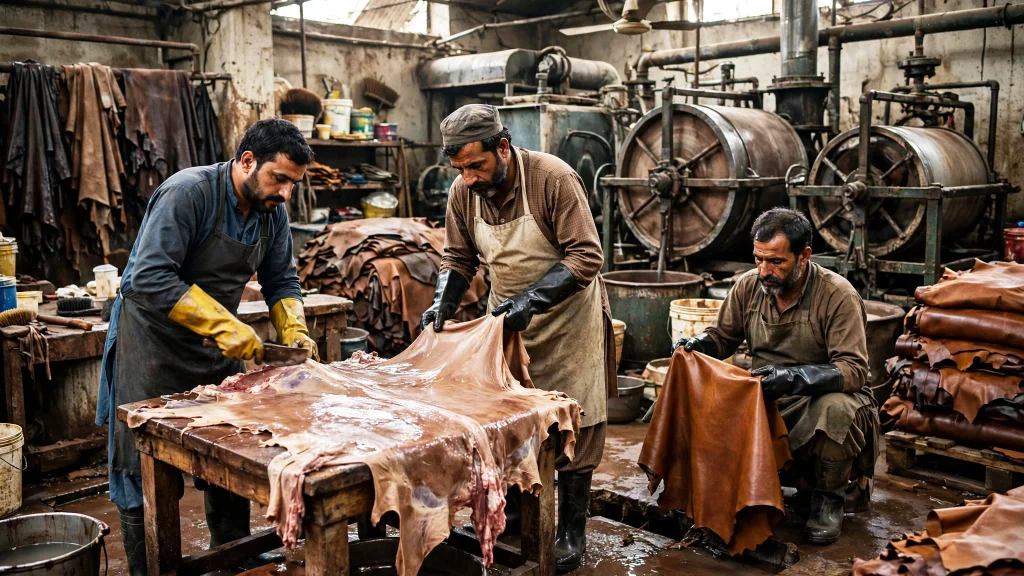
The process generally begins with the preparation of hides and skins. They are cleaned and prepared before tanning, which stabilises the natural material and makes it suitable for long-term use.
Tanning is one of the most important stages.
Chrome Tanning
Chrome tanning uses chromium salts to convert hides and skins into leather. It is widely used in modern leather manufacturing because it can produce leather with useful softness, flexibility and processing efficiency.
The final characteristics depend on the formulation and subsequent processing.
Vegetable Tanning
Vegetable tanning uses tannins derived from plant materials, including certain tree barks and other botanical sources.
It is traditionally associated with leather that can have a firm structure and develop a distinctive patina over time. Vegetable-tanned leather is often used in belts, wallets, bags and other products where its natural ageing characteristics are appreciated.
It can also feel firmer initially and may require a different care routine.
Combination Tanning
Some leather is processed using a combination of tanning methods to achieve particular characteristics.
This is another reason why it is not enough to judge quality solely by whether a product is described as vegetable-tanned or chrome-tanned. The final result depends on the entire manufacturing process.
After tanning, leather may be dyed, conditioned, dried and finished. The surface can be left relatively natural or treated to achieve a particular colour, texture, shine or level of protection. This is where the knowledge and skill of the tannery become important.
What Makes a High-Quality Leather Product Worth the Investment?
A beautiful piece of leather is only part of a well-made product.
The construction surrounding it matters just as much.
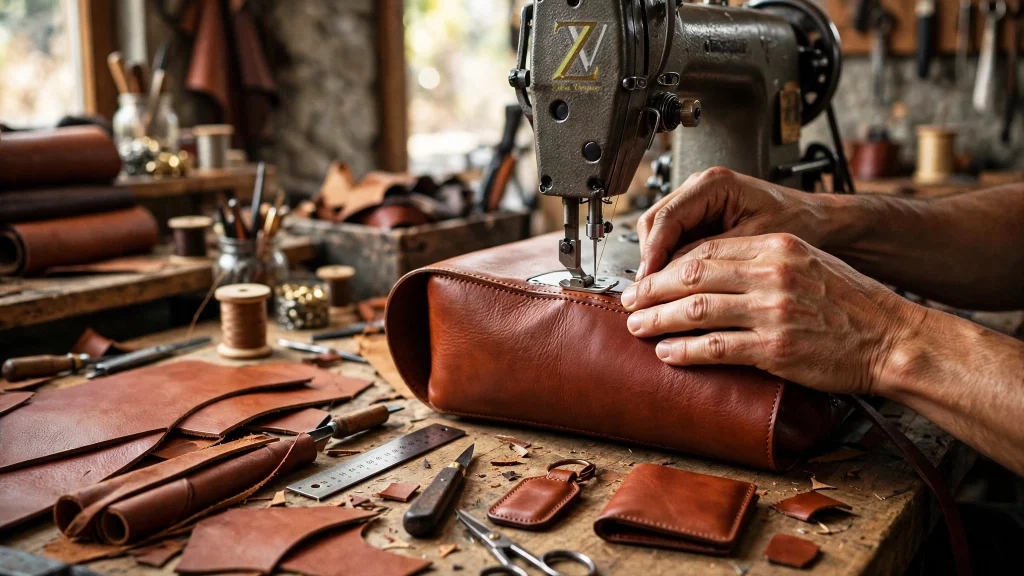
Consider a leather jacket. The material may be excellent, but poor stitching, weak zippers, an uncomfortable lining or an unsuitable fit can affect the entire experience.
The same applies to handbags, belts and wallets.
Leather Jackets
Look at the consistency of the leather, the stitching around the shoulders and sleeves, the quality of the lining and the operation of the zippers.
A good jacket should allow comfortable movement and sit properly across the shoulders. Its weight and thickness should suit the intended design.
Leather Handbags
Pay attention to the handles, attachment points, seams, corners and base.
These are areas that experience repeated stress during everyday use. A well-designed handbag should also have a functional lining, secure closures and a shape that remains practical when carrying ordinary belongings.
Leather Belts
A belt needs to withstand regular bending and tension.
Look at its construction, edges, buckle attachment and the quality of the leather. A belt made from a substantial, well-finished leather can be a dependable everyday accessory.
Ask whether it is made from a single leather piece or a laminated construction, especially if the product is described as full-grain.
Leather Wallets
Wallets are handled frequently, folded repeatedly and carried in pockets or bags.
The quality of the leather, the stitching around the edges, the finishing of the card slots and the construction of the folds all contribute to how well a wallet performs over time.
A beautifully made wallet should not simply look good when new. It should remain functional through everyday handling.
Why Leather Is Associated with Quality, Luxury and Status
There is a reason leather continues to appear in collections from both traditional luxury houses and independent makers.
It has long been associated with craftsmanship, durability and considered design.
A well-made leather jacket can give a simple outfit a distinctive character. A structured leather handbag can look elegant without excessive decoration. A classic belt or wallet can bring a sense of refinement to everyday dressing.
But the appeal is not simply about a price tag.
The value of a leather product comes from the combination of its material, construction, design and usefulness.
An expensive product is not automatically a good one, just as an affordable product is not automatically poorly made.
Knowing how to recognise quality allows buyers to look beyond branding and focus on what they are actually receiving.
For many people, that is what makes leather special: it can be an investment in a material and a piece of craftsmanship rather than just another seasonal purchase.
Can Genuine Leather Keep You Warm in Winter?
Leather jackets are particularly popular in colder regions, but it is important to understand what actually provides warmth.

Natural leather can help protect against wind, making it a useful outer layer. However, an ordinary leather jacket is not automatically insulated.
Its warmth depends on the thickness of the leather, the lining, the construction and the clothing worn underneath.
A lightweight lambskin jacket with a thin lining may be suitable for cool weather but insufficient for freezing temperatures.
For colder climates, a jacket with a quilted lining, additional insulation or shearling interior may be a more suitable option.
Shearling is particularly interesting because the wool remains attached to the inside of the sheepskin. This creates a warm inner layer that provides insulation while retaining the leather exterior.
In places with milder winters, a regular leather jacket can work comfortably over a sweater or other layers. In colder destinations, the lining and insulation deserve just as much attention as the outer leather.
The best winter jacket is not necessarily the thickest one. It is the one designed for the conditions in which it will be worn.
How to Care for Genuine Leather and Help It Last Longer
Natural leather can offer years of use, but it needs appropriate care.
Different finishes and types of leather require different treatments. A product suitable for smooth cowhide may not be appropriate for suede, nubuck or delicate aniline leather.
A few general habits can make a meaningful difference.
Keep it away from excessive moisture. If a leather jacket or bag becomes wet, gently remove surface water with a clean cloth and allow it to dry naturally at room temperature. Avoid radiators, hairdryers and direct heat.
Store it properly. Hang jackets on broad, sturdy hangers. Store bags in a breathable dust bag where possible, and avoid overcrowding or crushing them.
Protect it from prolonged sunlight. Extended exposure to strong sunlight can fade or dry some leather finishes.
Use appropriate leather-care products. Choose products designed for the specific type and finish of leather. Test them on a discreet area first and follow the manufacturer’s instructions.
Avoid unnecessary cleaning. Harsh household detergents, excessive water and unsuitable chemicals can damage the finish.
Seek professional help when necessary. Stubborn stains, extensive scratches and structural damage are often better handled by a leather-care specialist.
A little attention can help preserve the appearance and usefulness of a good leather product.
Pakistan and Its Place in the Global Leather Industry
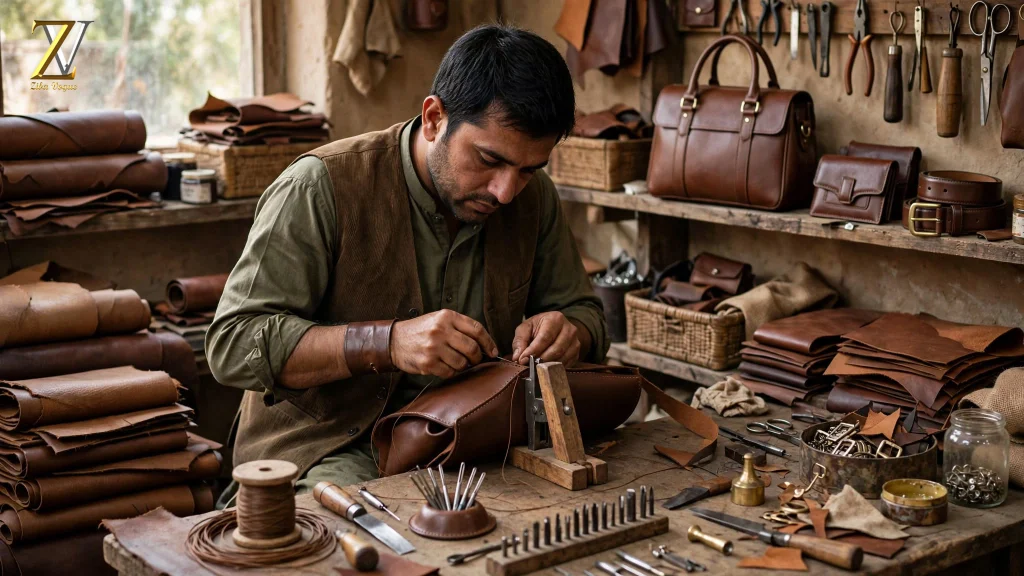
When discussing leather manufacturing, Pakistan deserves attention.
The country has an established leather industry that includes tanning, finished leather production, leather garments, gloves, footwear and other manufactured products. Its manufacturing base connects traditional leatherworking skills with modern production for international markets.
According to the Pakistan Tanners Association, using Pakistan Bureau of Statistics figures, the country exported approximately US$848.26 million in leather and leather products during the financial year 2024–25.
The export categories included:
- Leather gloves: approximately US$316.58 million.
- Leather apparel and clothing: approximately US$242 million.
- Finished leather: approximately US$138.20 million.
- Leather footwear: approximately US$137.56 million.
- Other leather manufactures: approximately US$13.93 million.
These figures demonstrate that Pakistan is not simply a source of raw hides. It has a substantial manufacturing and export presence across several categories of leather products.
Leather garments, in particular, are an established part of its international trade. Pakistan’s leather manufacturers supply products to markets across Europe, North America and other regions.
For international buyers, this makes Pakistan a country worth considering when researching leather manufacturing and sourcing opportunities.
However, the reputation of an entire industry should never replace the assessment of an individual manufacturer. Quality varies between suppliers. The tannery, material grade, production standards, workmanship and quality-control processes all matter.
The future of the industry also depends on responsible manufacturing. Tanning involves chemicals, water and industrial processes that need proper management. Environmental compliance, worker safety, traceability and responsible chemical handling are important parts of producing leather for increasingly quality-conscious international markets.
A truly good leather product should represent more than an attractive finish. The process behind it matters too.
Choosing Leather That Belongs in Your Life
Before purchasing a leather product, it is worth asking a few simple questions.
What type of leather is being used? Is it cowhide, lambskin, goatskin or another material? Is it full-grain, top-grain or split leather? What kind of finish has been applied? How is the product constructed? And is the seller able to provide clear information about its material and manufacturing?
These questions are useful whether you are buying a winter jacket, an everyday handbag, a work bag, a belt or a wallet.
Think about the way you intend to use it. A lightweight leather handbag has different requirements from a heavy-duty travel bag. A fitted lambskin jacket serves a different purpose from a structured cowhide biker jacket.
There is no need to choose the most expensive leather or the heaviest material simply because it sounds more premium.
Choose a material that suits the product, look for careful construction and make sure the seller can explain what you are purchasing.
That is a much better foundation for a worthwhile purchase.
The Beauty of Leather Is in What Lasts
Trends will continue to change. New silhouettes, colours and accessories will arrive with every season, but the appreciation for well-made materials is not limited to a particular moment.
A leather jacket may become softer with wear. A handbag may develop a richer surface character. A belt may remain part of someone’s wardrobe for years, while a wallet quietly accompanies its owner through everyday life.
That is the appeal of natural leather when it is properly selected, processed, made and cared for.
It brings together material, craftsmanship and personal style in a way that goes beyond appearance.
And perhaps that is what makes a well-made leather product worth appreciating: not simply how it looks on the day it is purchased, but how well it serves its owner long after that first impression.
Interested in Quality Leather Products or Sourcing Opportunities?
Whether you are looking for quality leather jackets, handbags, belts, wallets or other leather products, understanding the material and finding reliable manufacturing resources are important steps towards making the right choice.
At ZibaVogue, we believe that good craftsmanship begins with good materials and informed decisions. We welcome enquiries from individuals, retailers and businesses interested in exploring quality leather products and sourcing opportunities.
For further information, product enquiries or business discussions, write to us at business@zibavogue.com.
We would be pleased to understand your requirements and help you explore suitable resources and manufacturing connections.