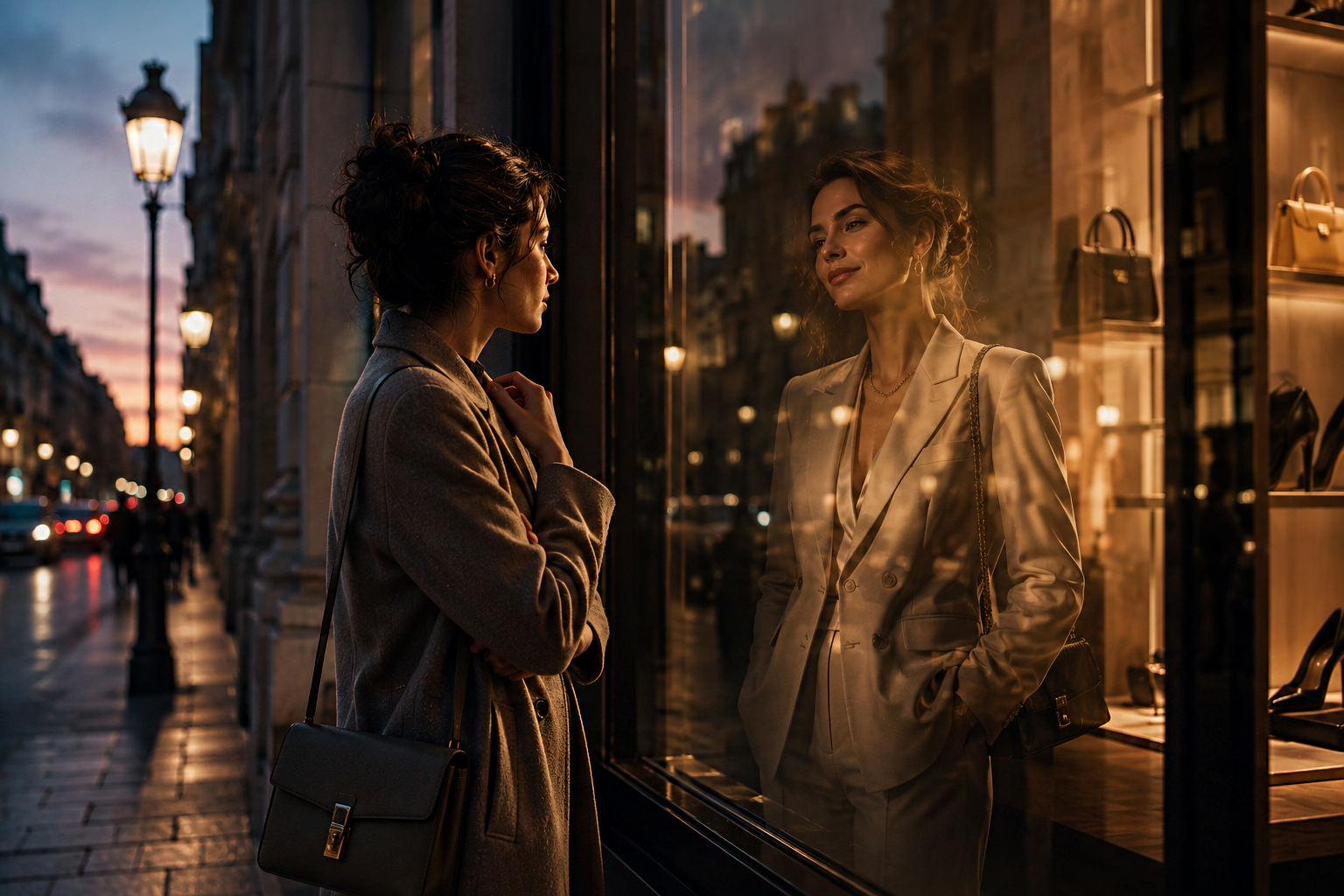
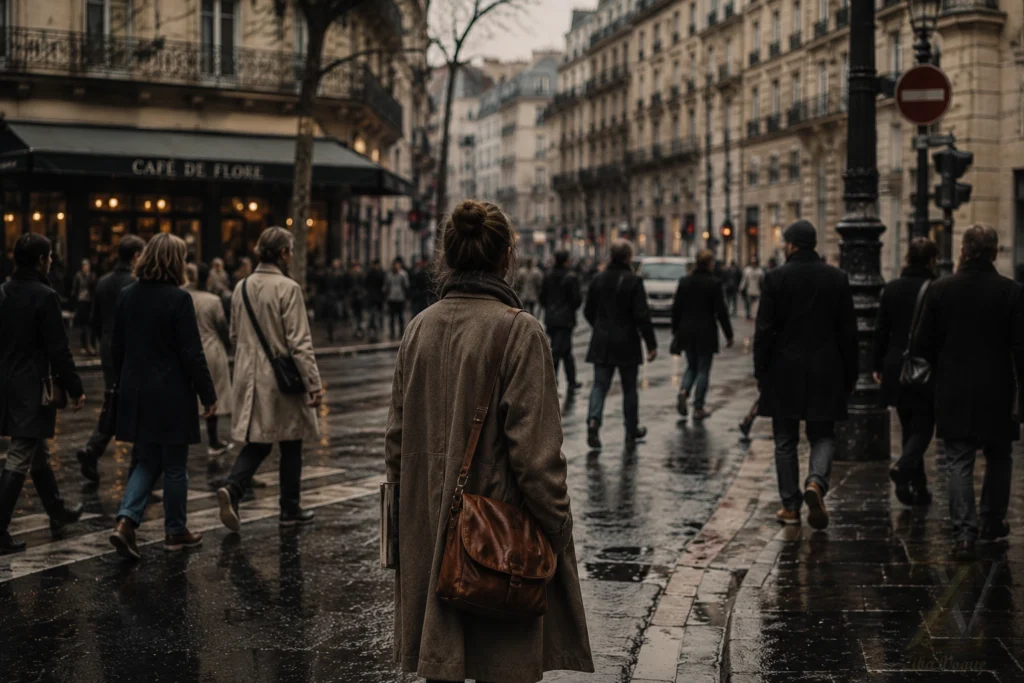
There is something quietly fascinating about old photographs.
Not the carefully staged family portraits displayed on living-room walls, but the ordinary ones—the photographs no one imagined would one day become meaningful. A friend leaning against a car. Someone standing outside a corner shop. A couple wandering through a market on an uneventful afternoon. Moments so ordinary that no one thought they were worth remembering, until time quietly proved otherwise.
At first, you notice the fashion of another era. Wider trousers. Narrower ties. Oversized collars. Hairstyles that belong unmistakably to their decade.
Then your attention shifts.
What stands out isn’t the fashion itself, but the people inside it.
No two of them seem to dress quite the same. One man rolls up his sleeves as if he’s done it every day of his life. Another buttons his jacket right to the collar. Someone else pairs polished leather shoes with clothes that were never meant to look formal. None of these choices feel deliberate. They feel lived in, shaped by habit rather than calculation.
Their clothes aren’t performing.
They’re simply part of the person wearing them.
That may be why old photographs feel strangely intimate. They capture people before the language of fashion became crowded with aesthetics, style formulas, and an endless stream of advice about what everyone should wear.
They remind us of something that has quietly slipped from the conversation.
Personal style was never something people rushed to find.
It revealed itself over time.
Nobody downloaded it over a weekend or reinvented it every season. Nor was it measured by how closely it reflected the latest trend or newest aesthetic. Instead, personal style emerged gradually, shaped by routine, circumstance, curiosity, and the slow accumulation of lived experience.
Some people found it through music.
Others through travel.
Some inherited a watch, a coat, or a scarf that became part of their identity without ever intending it to. Others returned to the same colours, fabrics, and silhouettes simply because they felt at home in them.
The remarkable thing is that very few of them were trying to create an image at all.
They were simply getting dressed.
It sounds like a small distinction. It isn’t.
Somewhere between fashion becoming more accessible than ever before and style becoming more visible than ever before, getting dressed stopped being an everyday ritual and quietly became a form of performance.
That performance isn’t always about impressing strangers. More often, it’s about seeking acceptance in ways we barely notice. We explored this idea further in The Most Expensive Thing We Buy Is Someone Else’s Approval, where fashion becomes just one expression of a much deeper human instinct.
Today, we own more clothes than previous generations could ever have imagined. We can order garments from almost anywhere in the world with a few taps on a screen. Inspiration travels faster than the seasons themselves. Before one trend has settled into everyday life, another has already arrived to replace it.
By every practical measure, we have more choice. Yet hidden inside that abundance is an unexpected irony.
Walk through almost any major city—London, Dubai, Karachi, Seoul, or New York—and the differences between wardrobes feel surprisingly subtle. The brands may change. The climate may demand heavier coats or lighter fabrics. But the silhouettes, colours, and combinations often echo one another, as though millions of people are participating in the same conversation without ever meeting.
This isn’t an argument against trends.
Fashion has always evolved by sharing ideas.
The more interesting question is whether, somewhere along the way, sharing ideas quietly became sharing identities.
If that is true, then another question naturally follows.
What happens to personal style when everyone begins to dress alike?
Style Was Once Something You Collected, Not Something You Chose
What separates fashion then from fashion now isn’t what people wore.
It’s how a wardrobe came into existence.
There was a time when no one expected a personal style to emerge overnight. It wasn’t assembled during a weekend shopping trip or reinvented with every new season. It accumulated quietly, almost without intention, shaped by years rather than months.
A coat bought for a first job.
Boots that survived countless winters.
A silk scarf picked up on holiday that somehow found its way back into the wardrobe every autumn.
None of those pieces were important because they were fashionable.
They became important because they stayed.
Clothes have always done more than cover us.
Given enough time, they begin to absorb the lives lived inside them.
A jacket remembers the rain it has been caught in. A watch quietly measures birthdays, missed trains, celebrations, and ordinary afternoons that seemed insignificant until they became memories. Even the simplest white shirt changes over the years, softening at the collar and cuffs in ways no factory can convincingly imitate.
That is why truly personal wardrobes are rarely built around clothing alone.
They are built around experience.
Fashion has always understood this instinct remarkably well, even if the industry sometimes encourages us to forget it. People rarely become attached to garments simply because they are well designed. They become attached because those garments begin to represent something beyond themselves.
A graduation.
The first pay cheque.
A journey that changed the way someone saw the world.
A dinner where two strangers became partners.
An ordinary afternoon that, years later, would mean everything.
Over time, a wardrobe stops looking like a collection of purchases and starts looking like a private archive.
Every piece has earned its place.
That is why so many people from earlier generations seemed instantly recognisable. Their clothes reflected the rhythm of their lives rather than the rhythm of the retail calendar.
Today, that rhythm has changed.
Walk into almost any contemporary fashion retailer and the entire outfit has already been imagined for you. The jacket belongs with the trousers. The trainers belong with the jacket. The bag belongs with everything else. Even the mannequin tells a complete story before you’ve had the chance to tell your own.
Online, the experience is remarkably similar. Outfit guides, shopping edits, “must-have” lists, capsule wardrobes, and perfectly curated mood boards promise to simplify the process of getting dressed.
And they do.
Convenience may be one of modern fashion’s greatest achievements.
It may also be one of its quietest compromises.
When every combination has already been suggested, there is less room for curiosity. Less room for mistakes. Less room for those wonderfully accidental moments that often become the beginning of a signature style.
The irony is difficult to ignore.
The fashion industry has never offered us more choice. Luxury houses, independent designers, vintage boutiques, global retailers, local artisans—we can explore almost every corner of the fashion world without leaving our homes.
Yet abundance doesn’t always produce originality.
Sometimes it produces familiarity.
Not because people have become less imaginative.
But because discovery has gradually been replaced by selection.
Style once demanded patience.
Today it often asks only for good taste.
There is an important difference.
One is built through experience.
The other can be purchased in an afternoon.
That doesn’t mean modern wardrobes are less beautiful.
Far from it.
They are often more refined, more polished, and more carefully considered than ever before.
But polish has never been the same thing as personality.
Some of the most memorable people have never dressed perfectly.
They dressed consistently.
Certain colours appeared again and again without much thought. Every autumn, the same jacket found its way back into their wardrobe. A familiar scarf was tied in exactly the same way for years, while rings that meant nothing to anyone else came to mean everything to them.
Looking back, those small habits became more distinctive than any trend.
Maybe we’ve misunderstood personal style all along. It has never been about finding clothes that no one else owns.
Perhaps it has always been about allowing ordinary life enough time to leave its fingerprints on the things we wear.
“Style once demanded patience. Today it often asks only for good taste.”
When Everything Is Available, Why Does Everything Look the Same?
For most of fashion history, style travelled slowly.
A new silhouette might begin on a runway in Paris, appear months later in magazines, and eventually find its way into department stores halfway across the world. By the time it reached ordinary wardrobes, it had already been interpreted, adapted, and often transformed into something entirely different.
Distance gave fashion room to breathe.
It also gave people room to decide.
A trend wasn’t accepted simply because it existed. It had to survive conversations, changing seasons, personal taste, and the practical realities of everyday life. Some embraced it. Others ignored it. Many borrowed only the parts that felt right for them.
That quiet process of editing was where personal style often began.
Today, fashion moves differently.
The moment a collection appears on a runway, it is photographed, shared, analysed, and recreated before many of the original garments have even reached the shop floor. Inspiration no longer travels across continents over the course of a season. It arrives in our hands almost instantly.
In many ways, this is extraordinary.
Fashion has never been more accessible. A student in Lahore can discover an independent designer in Copenhagen. Someone in New York can fall in love with traditional Pakistani craftsmanship. Ideas that were once limited by geography now belong to everyone.
The world has become one enormous wardrobe.
Yet something curious happens when every wardrobe opens onto the same world.
Our choices begin to overlap.
Not because we are trying to imitate one another, but because we are all standing in front of the same window.
We scroll through the same collections.
Notice the same colours.
Pause at the same photographs.
Admire the same outfits.
Without ever speaking to each other, millions of people are influenced by the same visual conversation.
That isn’t necessarily a problem.
Fashion has always been built on shared ideas.
No designer creates in complete isolation. Every generation borrows from the one before it, reinterpreting familiar shapes, fabrics, and references. Influence has always been part of the creative process.
Uniformity is something else entirely.
It appears when inspiration stops at admiration.
When we no longer ask how a trend fits into our own lives, but how quickly we can reproduce it.
There is a subtle difference between wearing a trend and letting a trend wear you.
One expands your wardrobe.
The other quietly replaces your point of view.
It may explain why so many people own more clothes than ever before, yet still feel they have nothing distinctive to wear.
The problem is rarely a lack of options.
It is a lack of connection.
That same disconnect often explains why our wardrobes keep growing without making us feel any more satisfied. It’s an idea we explored in Why Do We Buy Things We Don’t Even Need?, where the psychology of buying turns out to matter far more than the purchase itself.
A wardrobe filled with carefully chosen pieces should feel increasingly personal with time. Instead, many wardrobes are in a constant state of replacement, with new purchases arriving before older favourites have had the chance to become meaningful.
Fashion has become wonderfully efficient.
It has become less patient.
And style has always asked for patience.
Not because it takes years to buy beautiful clothes, but because it takes years for beautiful clothes to become unmistakably yours.
Think about the people whose style you admire most.
It is rarely one spectacular outfit that makes them memorable.
It is consistency.
The navy blazer they reach for every spring.
The silver ring they have worn for twenty years.
The linen shirts that appear every summer, growing softer with each passing season.
The leather bag that carries the marks of airports, cafés, offices, and ordinary Tuesdays.
These things are not memorable because they are expensive.
They are memorable because they have become inseparable from the people who wear them.
Fashion changes every season.
Character doesn’t.
That has always been the invisible thread connecting truly personal style.
It isn’t built by chasing every new idea.
It is built by allowing the best ideas to become part of your own story before moving on to the next.
The People We Remember Never Dressed Like Everyone Else
Years from now, very few of us will remember what was trending this season.
We’ll forget the colour that dominated shop windows. The trainers everyone wanted. The jacket that sold out in a week. Even the aesthetics that once seemed impossible to escape will eventually blur into one another, becoming little more than snapshots of a particular moment in fashion.
Trends have always been temporary.
That isn’t a flaw.
It’s their purpose.
They arrive to inspire us, to challenge familiar ideas, and to push fashion forward. Without them, style would become stagnant. Every generation deserves to reinterpret clothing in its own way.
But trends were never meant to become identities.
Somewhere along the way, many of us began treating them as though they were.
Instead of asking what belongs in our wardrobe, we started asking what belongs in this season’s wardrobe.
It seems like a subtle shift.
In reality, it changes everything.
Because personal style has never been built by keeping up.
It has been built by holding on.
Holding on to the jacket that fits perfectly even after fashions have changed.
Holding on to the watch that has measured years of your life instead of merely matching your outfit.
Remaining faithful to the colours that always make you feel like yourself, even when they disappear from trend forecasts.
The most stylish people rarely look timeless because they ignore fashion.
They look timeless because they know which parts of fashion deserve a place in their lives—and which parts can simply pass by.
It’s one of the reasons movements like quiet luxury continue to resonate. The appeal has never been about dressing expensively, but about dressing with enough confidence that trends no longer dictate every decision.
That kind of confidence doesn’t appear overnight.
It grows quietly, almost unnoticed.
Not through buying more.
Through understanding yourself a little better with every passing year.
Maybe that is why old photographs continue to captivate us.
When we look at them, we aren’t admiring perfect styling.
We’re recognising something much rarer.
A sense of identity that wasn’t trying to convince anyone.
The clothes don’t feel borrowed from an aesthetic.
They feel inseparable from the person wearing them.
Maybe that’s the real difference between dressing well and having personal style.
Dressing well earns compliments.
Personal style earns recognition.
People may admire a beautiful outfit.
But they remember a person whose clothes feel impossible to separate from their character.
And perhaps that is the question worth carrying into our own wardrobes.
Not…
“What’s everyone wearing this year?”
But…
“Years from now, when someone looks at an old photograph of me, will they see a trend… or will they see me?”
Fashion will continue to evolve, just as it always has.
Even luxury houses have moved in this direction. As discussed in Why Luxury Brands Are No Longer Obsessed With Logos, many brands are now relying less on obvious branding and more on craftsmanship, individuality, and lasting design.
New silhouettes will replace old ones.
Different colours will come into fashion.
Designers will keep reinventing the past.
And there is every reason to celebrate that.
Fashion has never been at its best when it asks everyone to look the same.
It has always been at its best when it gives people the freedom to become more fully themselves.
Because in the end, personal style isn’t something you find in a shop, a trend report, or an algorithm.
It’s something that quietly emerges when your clothes stop telling the world who you hope to be…
…and begin reflecting the person you’ve become.