
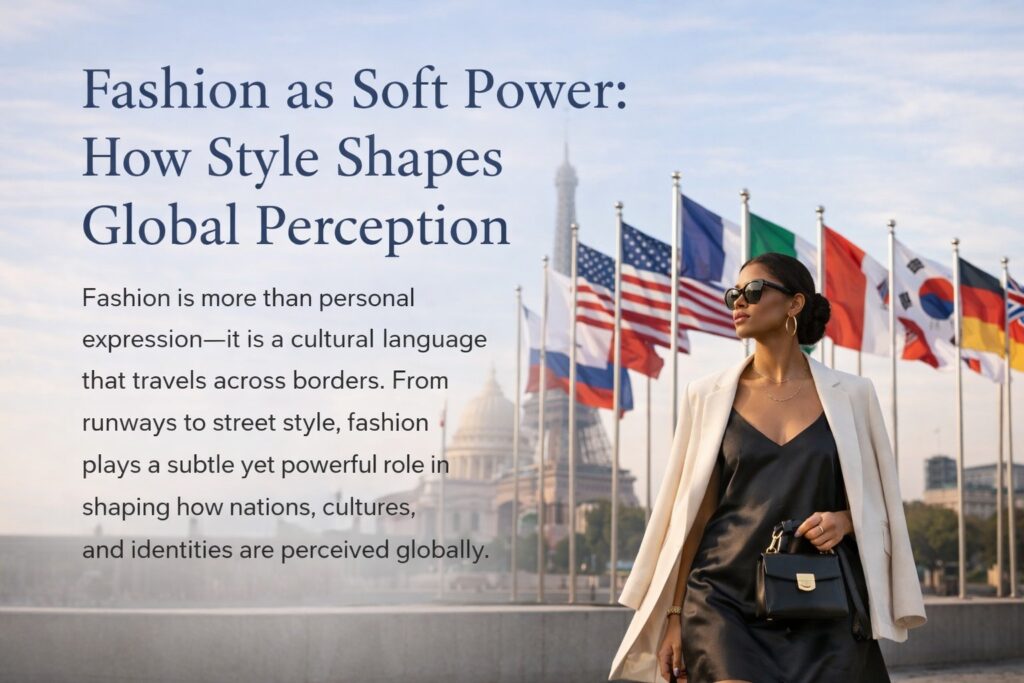
Fashion has long been viewed as an artistic and commercial industry, but in today’s interconnected world, it also functions as a form of soft power. Without speeches or policies, clothing, aesthetics, and style narratives influence how cultures are understood and how countries project their identity to the world. In many ways, fashion communicates values, creativity, and social change more effectively than words.
Understanding Soft Power Through Style
Soft power refers to the ability to influence others through attraction rather than force. Fashion naturally fits into this concept. When a country becomes associated with innovation, elegance, sustainability, or craftsmanship through its style, it builds a positive global image. Paris, Milan, Tokyo, and Seoul are not just cities—they are fashion identities that shape how the world views their cultures.
Fashion as Cultural Storytelling
Every garment carries a story. Traditional textiles, modern reinterpretations, and local craftsmanship reflect history, values, and social norms. When these elements appear on international platforms, they introduce global audiences to cultural narratives in an accessible and engaging way. Fashion weeks, exhibitions, and collaborations act as cultural exchanges that strengthen mutual understanding.
Media, Celebrities, and Global Influence
Global media and public figures amplify fashion’s role in shaping perception. When designers dress international icons or when celebrities embrace styles from different cultures, fashion becomes a bridge between societies. These moments influence trends while also highlighting cultural appreciation and global interconnectedness.
The Rise of Conscious and Ethical Fashion
Modern fashion is increasingly tied to values such as sustainability, inclusivity, and ethical production. Brands that prioritize these principles contribute to a positive global reputation, showing that style can reflect responsibility and awareness. This shift influences how countries and industries are perceived in global conversations about the future.
Style in a Globalized World
In the digital age, trends spread instantly. Social media allows local styles to gain international visibility, giving emerging designers and cultures a global voice. Fashion no longer flows in one direction; it is a continuous exchange shaped by diverse perspectives.
Conclusion
Fashion’s influence extends far beyond aesthetics. As a form of soft power, it shapes global perception by communicating culture, values, and identity without confrontation. In a world where visual storytelling matters more than ever, style remains one of the most powerful tools for global connection and understanding.