For a while, fashion seemed determined to erase the evidence of its own making. Clothes became smoother, cleaner and increasingly difficult to distinguish from one another. Trends travelled at extraordinary speed, collections arrived almost continuously, and the same silhouettes could appear on screens around the world within days. In that environment, something as slow and tactile as a crocheted top or an embroidered blouse could easily feel like a leftover from another era.
Yet fashion has begun looking in that direction again.
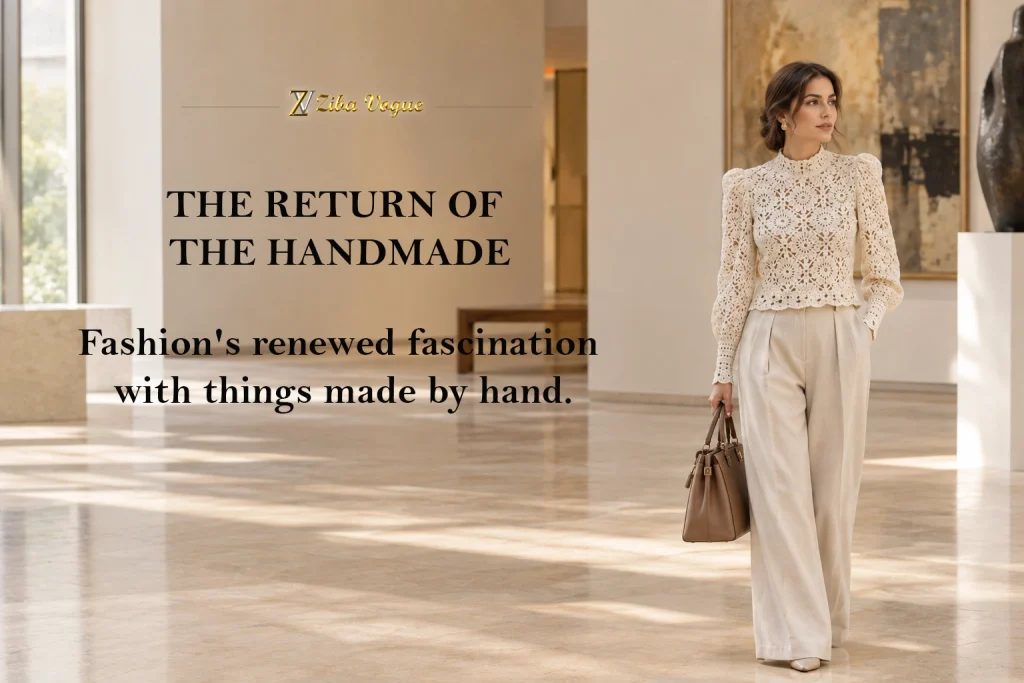
Not nostalgically, and not quite in the way it did during previous craft revivals. For Spring/Summer 2026, crochet, embroidery, openwork and other visibly crafted techniques have appeared across international fashion collections and trend forecasts. Vogue’s SS26 research, drawing on retail intelligence and trend forecasting, identified English embroidery as a growing direction and reported a 16 percent projected increase from Heuritech, while Pinterest searches for “babydoll crochet top” had already risen significantly. Crochet itself has moved through collections from houses including Etro, Isabel Marant, Burberry and Balmain, where it has been treated less as a novelty and more as a legitimate part of contemporary dressing.
That is what makes the current moment worth paying attention to.
This is not simply a story about crochet coming back.
It is a story about fashion becoming interested in the things that show evidence of a human hand.
The crochet top is perhaps the easiest place to see the change. For years, the word itself could summon a very specific image: a loose bohemian garment, a 1970s reference, a beach cover-up or a brightly coloured festival piece. That version still exists, but the newer interpretation is considerably broader. Across the SS26 collections, crochet has appeared in cleaner silhouettes, fitted shapes, geometric constructions and more sophisticated layering. At Isabel Marant, it has taken on an effortless Parisian quality; Etro has embraced its bohemian character, while Burberry has worked crochet details into more urban, utility-inspired looks. Balmain has pushed the technique towards something more structured and glamorous.
That change in styling is important because it prevents crochet from becoming a costume.
A handmade top no longer has to announce that it is handmade. It can simply be the interesting texture underneath a tailored jacket, the unexpected detail with a pair of trousers, or the small piece that gives an otherwise restrained outfit some personality. This is where the current revival feels more sophisticated than the craft trends of the past. The technique may be old, but the way it is being worn is contemporary.
Embroidery is moving through fashion in a quieter way. Unlike crochet, it does not necessarily change the entire silhouette of a garment. Instead, it changes the surface. A simple blouse can become something else entirely with a border of flowers, an embroidered collar or a few deliberately placed motifs. The appeal lies partly in that restraint. The detail rewards a closer look rather than demanding attention from across the room.
And perhaps that is precisely why these techniques feel relevant now.
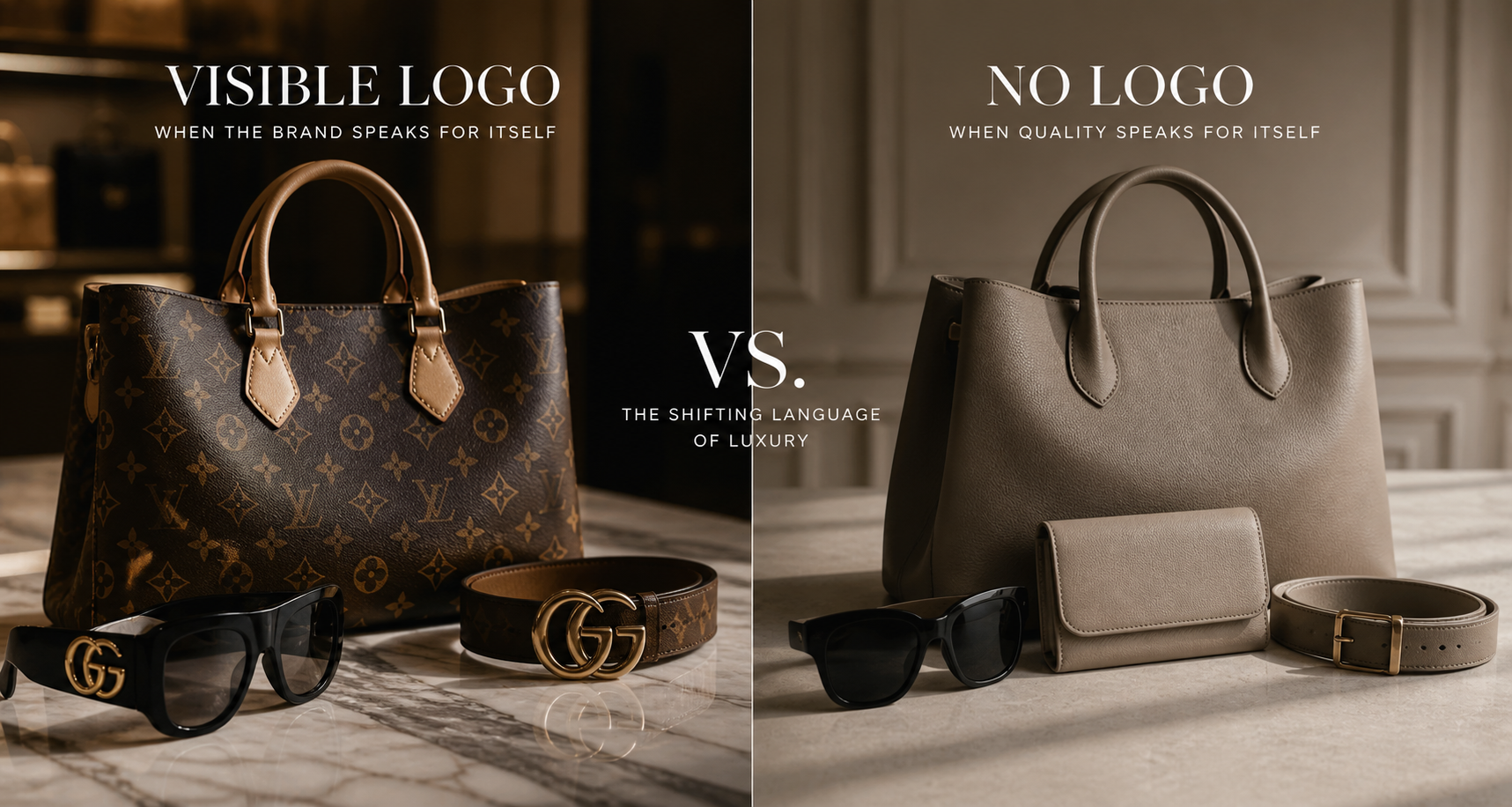
After years in which fashion communicated value through recognisable logos, obvious branding and instantly identifiable products, there is growing interest in pieces whose appeal takes longer to understand. Harper’s Bazaar India recently described this renewed attention to craftsmanship across crochet, embroidery and handwoven textiles, connecting it to a broader shift away from conspicuous branding and towards the skill and labour behind a garment.
There is an irony here.
Fashion is discovering again what many craftspeople never stopped knowing: the time involved in making something can be part of its beauty.
A machine can reproduce a shape with extraordinary precision. A human hand introduces something less predictable. The stitch may vary slightly. The embroidery may have its own rhythm. The surface may not be perfectly uniform. Those details are often precisely what make the finished piece feel alive.
This does not mean that every handmade garment is automatically better, more sustainable or more valuable. The word “handmade” itself has become a marketing language, and the fashion industry is increasingly questioning what the label actually means. Vogue recently examined the problem of “craft-washing,” where industrially produced products can be presented as artisanal, while organisations such as Nest and Craftmark are working to distinguish genuine handcrafted production and responsible practices.
That distinction matters.
The current interest in craftsmanship should not turn into another aesthetic that brands can simply reproduce on a mass scale and sell back to consumers as authenticity. There is a difference between a machine-made garment decorated to look handmade and a piece that genuinely carries the time, skill and technique of an artisan.
It is also where the conversation becomes particularly interesting for South Asian fashion.
Embroidery, crochet, weaving and other forms of textile craftsmanship are hardly new discoveries here. They have existed across communities and generations as part of everyday clothing, occasion dressing and regional craft traditions. What feels new is not the existence of these techniques, but the renewed attention they are receiving within global fashion.
That creates an unusual moment. International fashion is increasingly interested in the visual language of craftsmanship at precisely the time when consumers are becoming more conscious of where clothing comes from and what gives an object its character. A technique that may have been considered traditional in one part of the world can suddenly appear contemporary on an international runway.
But perhaps the most interesting development is happening away from the runway.
The handmade revival makes sense at a time when people are surrounded by an extraordinary amount of sameness. Scroll through social media and it is easy to see the same silhouettes, the same colour combinations, the same viral pieces and the same carefully photographed wardrobes repeating themselves. Fashion has never offered more choice, yet individuality can sometimes feel harder to achieve.
A handmade piece solves that problem in a quiet way.
Even when two people own garments made using the same technique, they rarely look completely identical. The scale of the pattern, the colour, the texture, the way the piece falls on the body and the way it is styled all introduce variation. A small crochet top can therefore feel more personal than its size suggests.
That may explain the appeal of these pieces better than the word “trend” ever could.
People are not necessarily searching for another trend to follow. They may be searching for something that feels less interchangeable.
This is also why the smaller handmade pieces deserve attention. A full crochet dress can make an obvious statement, but a little embroidered top, a crocheted camisole or a handworked blouse can be far more versatile. Worn with denim, tailored trousers or a simple skirt, the piece can become part of an existing wardrobe rather than forcing the wardrobe to revolve around it.
The best interpretation of the trend may therefore be surprisingly modest.
One handmade piece can be enough.
A crocheted top with relaxed trousers. An embroidered blouse beneath a structured blazer. A delicate openwork layer over a simple dress. A small handworked detail against an otherwise minimal outfit. The contrast between something visibly crafted and something sharply modern is often what makes the combination interesting.
There is something else worth noticing here: handmade fashion is not necessarily asking us to reject modernity. It is doing almost the opposite.
The strongest SS26 interpretations take traditional techniques and place them inside contemporary proportions, styling and wardrobes. The craft is not being preserved behind glass. It is being used, altered and sometimes challenged.
That is the difference between nostalgia and revival.
Nostalgia looks backwards.
A revival takes something from the past and gives it a reason to exist now.
Crochet has found that reason in texture, lightness and individuality. Embroidery has found it in detail. Handcrafted textiles find it in the growing appreciation for clothing that carries some evidence of its own making.
Fashion’s renewed fascination with the handmade may ultimately be less about craft than it is about attention.
Making something by hand requires attention. So does noticing the difference between an ordinary stitch and an extraordinary one, or choosing a piece for its construction rather than its label. Even wearing a handmade garment well requires a certain restraint: letting the texture speak without allowing it to become the entire story. Even to wear a handmade garment well requires a certain restraint: letting the texture speak without allowing it to become the entire story.
After years of fashion moving faster and faster, that slower quality feels surprisingly modern.
The handmade is not returning because fashion has run out of new ideas.
It is returning because, in a world where almost everything can be reproduced quickly, the evidence of human effort has become interesting again.
And that may be the most lasting part of this particular fashion moment. Not the crochet top itself, nor the embroidered blouse, nor any single technique that happens to dominate one season.
It is the renewed desire for clothing that feels like someone cared enough to make it.