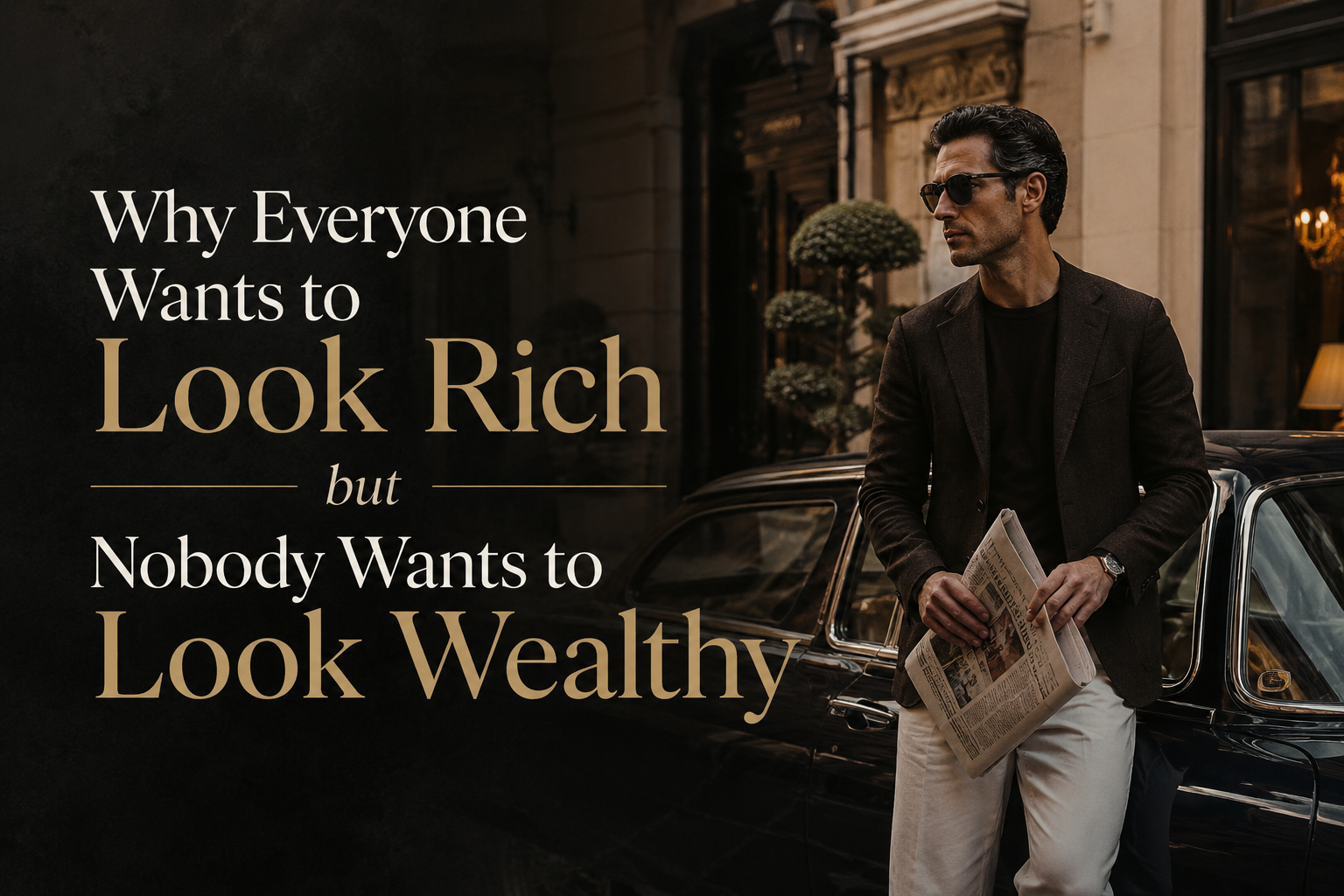
There was a time when luxury was loud.
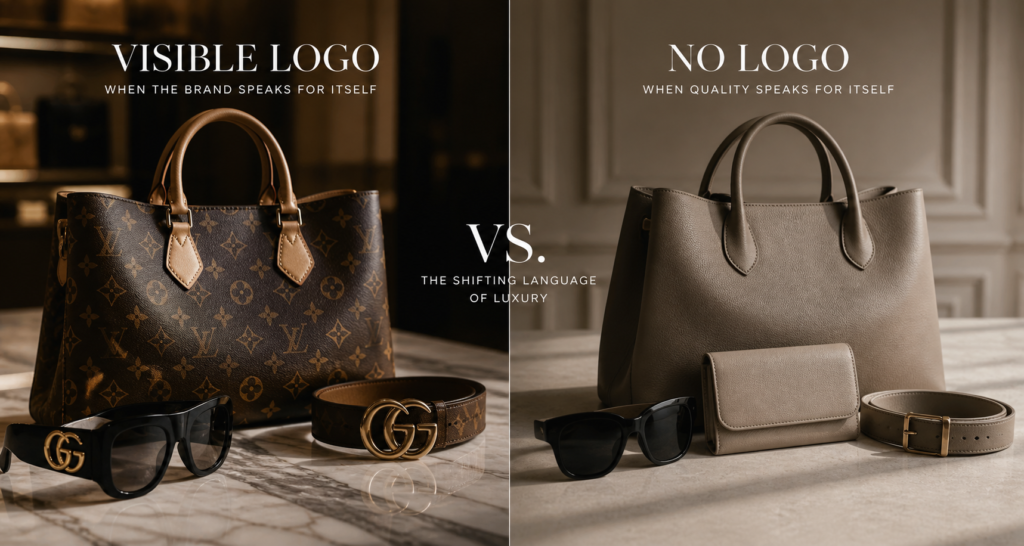
It announced itself in oversized logos, unmistakable monograms, and instantly recognizable symbols. You didn’t need to ask what someone was wearing—the brand made sure you already knew.
But something has shifted.
Walk into the wardrobes of today’s most influential figures, and you’ll notice a quiet disappearance. The logos are fading. The branding is softer. In many cases, it’s invisible altogether. And yet, paradoxically, the sense of luxury feels stronger than ever.
This is not a coincidence. It’s a transformation.
When Branding Became Invisible
Luxury brands have not lost their identity—they’ve refined it.
Instead of placing logos at the center of their designs, many have begun focusing on what cannot be immediately seen: the cut of a coat, the weight of a fabric, the way a garment moves with the body. The emphasis has shifted from recognition to experience.
A sweater no longer needs a logo to prove its value. The texture, the fit, the quiet precision of its construction speak more convincingly than any symbol ever could.
Brands like Loro Piana and The Row have quietly led this shift. Their designs rarely rely on visible logos, instead focusing on exceptional materials, precise tailoring, and an almost understated presence. A garment from these houses may appear simple at first glance, but its value lies in what is felt rather than what is seen.
This is where modern luxury lives now—not in visibility, but in understanding.
The Psychology of Recognition Without Logos
There is a subtle power in not needing to explain.
When someone wears a visibly branded item, the message is clear and immediate: this is expensive. But when branding disappears, something more complex happens. Recognition becomes selective.
Only those who understand fashion—who recognize quality, tailoring, and material—can identify what they are looking at.
It creates a different kind of exclusivity.
Not everyone is meant to notice. And that is precisely the point.
Luxury, in this sense, becomes less about broadcasting wealth and more about belonging to a quieter, more informed circle. It is no longer about being seen by everyone, but about being understood by the right few.
How Luxury Maintains Power Without Visibility
At first glance, removing logos might seem like a risk. After all, branding has always been a cornerstone of fashion marketing.
But in reality, this shift makes luxury even more powerful.
When a brand no longer relies on visible identity, it signals confidence. It suggests that its value is intrinsic, not dependent on external validation. The product does not need to prove itself—it simply exists, and that is enough.
This kind of confidence is rare. And in fashion, rarity is everything.
By stepping away from obvious branding, luxury brands are not becoming less recognizable. They are becoming more exclusive, more refined, and ultimately more desirable.
The New Language of Status
In today’s fashion landscape, status is no longer communicated through logos—it is communicated through restraint.
A perfectly tailored coat in a muted tone. A pair of shoes crafted from exceptional leather. A simple outfit that feels effortless but is anything but.
These are the new signals.
They require attention, not just a glance. They invite observation rather than demand it. And in doing so, they change the way we perceive value.
The message is no longer loud. It is quiet, deliberate, and deeply intentional.
You have to notice.
You have to understand.
A Shift That Feels Permanent
What we are witnessing is not just a trend—it is a redefinition of luxury itself.
As fashion moves further away from excess and closer to meaning, the role of branding continues to evolve. Logos have not disappeared entirely, but their importance has diminished. What matters now is something far less visible and far more enduring.
Quality. Subtlety. Intent.
Luxury is no longer about showing the world what you have.
It’s about knowing—and not needing to say it.