There was a time when diplomacy happened behind closed doors — in quiet meeting rooms, through carefully worded statements, in formal handshakes under chandelier lights.
Today, it also happens on red carpets. On Instagram feeds. On the streets of Paris, Seoul, Lagos, Karachi, and New York.
Welcome to the era where fashion is no longer just fabric — it is influence. It is identity. It is soft power stitched in silk and tailored in confidence.
When Clothes Speak Louder Than Politics
Before a leader speaks, before a celebrity posts, before a designer gives an interview — the outfit has already delivered a message.
When global icons step out wearing traditional craftsmanship at international events, they are not simply “dressed well.” They are exporting culture. When a rising designer from South Asia reimagines heritage embroidery for a global runway, that is not just fashion — it is narrative diplomacy.
Style has quietly become the most persuasive ambassador a nation can send.
Unlike politics, fashion doesn’t argue. It invites.
Unlike speeches, it doesn’t lecture. It fascinates.
And fascination travels faster than policy.
The Runway Is the New World Stage
Look at the global fashion calendar — Paris, Milan, London, New York. These cities are not just hosting fashion weeks; they are hosting cultural power exhibitions. Designers are storytellers, and collections are political essays written in color, texture, and silhouette.
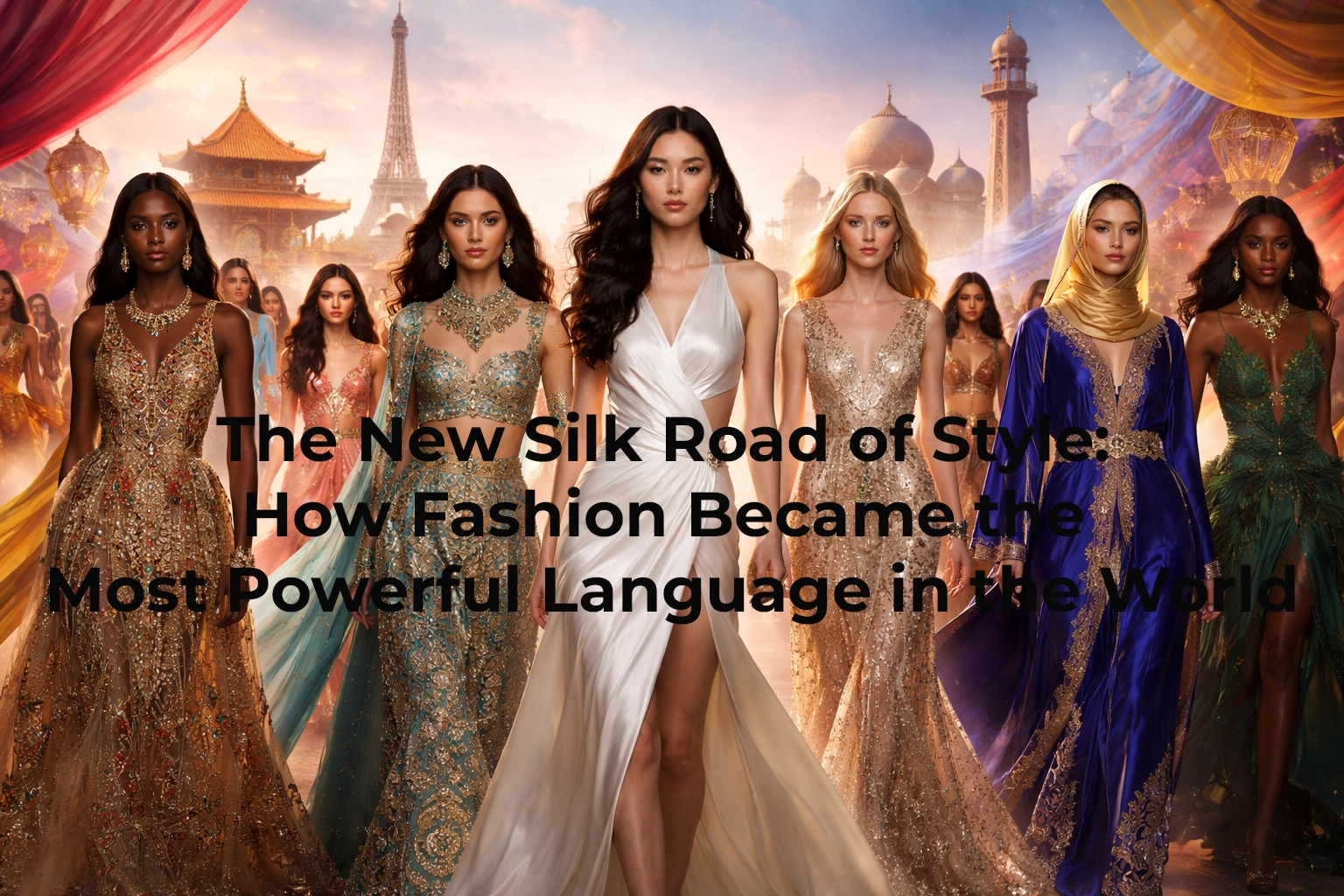
Streetwear from Seoul reshapes global youth culture. African prints redefine luxury conversations. Middle Eastern modest fashion builds billion-dollar markets while shifting global standards of beauty. South Asian bridal couture influences Western wedding aesthetics.
Fashion is no longer “following” the West. It is collaborating, competing, and redefining the global standard.
And the world is watching.
The Psychology of What We Wear
There is something deeply human about clothing. It is the first layer of protection, but also the first layer of expression.
We wear ambition.
We wear rebellion.
We wear memory.
A structured blazer can communicate authority. A flowing silhouette can suggest freedom. Traditional attire worn on an international stage signals pride — and pride is contagious.
Psychologists call it “enclothed cognition” — the idea that what we wear shapes how we feel and how others perceive us. Fashion doesn’t just change appearance; it alters energy. And energy shapes perception. That is power.
The Digital Amplification Effect
In the past, fashion influence moved season by season. Now, it moves second by second.
One viral look can elevate a local brand to global demand overnight. One culturally resonant outfit can spark international conversation. One bold styling decision can reshape beauty standards.
Social media has democratized fashion influence. You no longer need a royal title or Hollywood contract to shape trends. Creativity travels without a passport.
For emerging markets and independent designers, this shift is revolutionary. It levels the playing field. It allows authenticity to compete with legacy.
And authenticity is winning.
Luxury Is Being Redefined
The old definition of luxury was exclusivity. Rare materials. High price tags. Limited access.
The new definition? Meaning.
Consumers today want to know:
- Who made this?
- What story does it tell?
- Does it represent something larger than aesthetics?
Craftsmanship, sustainability, heritage — these are no longer niche conversations. They are expectations.
The most powerful brands today are not those with the loudest logos. They are the ones with the clearest identity.
Fashion as Cultural Memory
Every culture carries history in its textiles.
Embroidery patterns that survived centuries. Weaving techniques passed down through generations. Color palettes rooted in geography and tradition.
When designers reinterpret these elements for global audiences, they are not erasing history — they are preserving it in motion.
Fashion becomes a living archive.
And archives, when worn proudly, become influence.
The Rise of Cultural Confidence
Perhaps the most significant shift in global fashion is this: cultural confidence.
For decades, many regions adapted their aesthetics to fit Western approval. Today, the direction is reversing. Designers are leaning into their roots. Consumers are celebrating distinctiveness rather than conformity. Modesty is powerful. Maximalism is powerful. Minimalism is powerful. What matters is intention. The global fashion narrative is no longer singular — it is plural. And that plurality is reshaping perception worldwide.
Why This Matters Now
We are living in a time of geopolitical tension, cultural debates, and identity conversations. In such an era, fashion offers a rare bridge.
It allows cultures to meet without confrontation.
It enables dialogue without translation.
It builds curiosity instead of conflict.
A beautifully crafted garment can do what press releases cannot — make people look twice, ask questions, and appreciate difference. That is influence at its most subtle and its most effective.
The Future: Influence Woven in Fabric
The next decade will not be dominated by those who simply design beautiful clothes. It will belong to those who understand that fashion is strategy. That every collection is communication. That every stitch carries a statement. From sustainable innovation to heritage revival, from digital couture to artisanal preservation — fashion is shaping how nations are seen and how individuals define themselves. The question is no longer whether fashion has power.
The question is: who is using it wisely?
At Zibavogue, we believe style is more than seasonal trends. It is a global language — one that shapes perception, builds identity, and defines the future of cultural influence.
Because in this era, what you wear is not just personal.
It is political.
It is psychological.
It is powerful.